1.
I’m standing in the shade of a blue canopy, surveying the loaves of sourdough. A kid about yea high with a ring of ice cream around his mouth plucks at an unwatched loaf, his mother with her back to him, talking on the phone. He freezes when he notices me looking, and I give him a wink.
The baker wipes his hands on his apron before bagging up a double-order for a couple of Europeans, who say a slanted thank-you and shove the goods into a Gore-Tex backpack. It’s 80 degrees, easy. It comes my turn, and I make a two with my hand and reach for my wallet. My date tonight, she likes to cook for me. She adds the food onto my rate and doesn’t ask for receipts, so it’s one for us and one for me.
My head’s down when I turn around, so I almost run into the guy, just standing there with the head of an oversized infant, stuffed into a wicker fedora.
“Brady Chase, right?” He says my trade name in a nasally drawl. He’s got a runny nose and a mouth like the barrel of a shotgun; open, hairless, vaguely greasy. “You got a minute?”
“I’m not interested.” I move around the guy. He’s got sweat stains on the tits of his linen shirt.
“It’s about your future.” He says to my back.
I slip into the heave of the Santa Monica Farmers Market — a blizzard of conversations, the click of hard-soled shoes, a knife clopping atop a cutting board.
A toddler too big for her stroller drops an ice cream cone and screams. The back of my neck tingles and I scan behind me for a wicker fedora, keep moving.
A hunched Asian man in gold robes sings a rusty mantra and walks slowly with his arms out, rubbing a piece of polished jade in one hand, proffering an armful of prayer beads with the other. He smiles to a young white woman in sneakers and a university sweater, who presses her palms together and steps to him with her head low. The beads click together as he comes to a stop.
There is a kind of peace as she waits to be blessed and he waits for her to reach to where she keeps her money. Then he names his price, and she looks like she’s been smacked. I can’t blame her for wanting a pure moment. I believe in them, too, like chemtrails and Bigfoot, like prove to me they don’t exist and then we’ll talk. Still, I feel sick to my stomach and just wish she’d get the picture.
I spot an herb tent and cut through traffic. A bit of sun pokes at a pile of dill, $3 for a bunch, and I bend to smell its warmth; clean fur and bright mustard.
“I’m not fucking around, you know.” The man with the wicker fedora blocks the sun like a cartoon cut-out. I set down the shopping bag in my right hand, shake out the digits.
As a general rule, I don’t offer my services to married women. Even the remote husband is nosy and known to settle his injured ego in ways an escort can’t afford. But rules being rules and rent being, you know, fucking high, makes me wonder, is this Margot’s or Madeline’s, maybe Eleanor’s?
“I didn’t sleep with her, if that's a factor for you.” I wager, and he steps under the awning. His nostrils are chapped and red. He pats at them with a ball of tissue, then stuffs it back into his pocket without taking his eyes off me.
“I don’t give a shit about any of that. It’s about Clare Overland.”
“Doesn’t ring a bell.” Of all the names, he has to spit hers.
I pick up the bag again in my right hand and put my shoulder into his chest and hear the wind knock out of him in a murky cough. He follows me this time, closely.
“Look, I know you know her. I’ve been casing her place for a week. Caught you leaving there this morning.”
I keep my head forward. Faces blur together as I wedge my shoulder through the crowd. Voices and stray words whirl around me. My cells are all jacked up, wanting me to run.
“It’s just, you should know, things don’t go so good for the men in her life.” He gabs, and I turn on him.
“What makes you think you know the first thing about her?”
People ebb around us like we’re stones in a stream. His breath smells like a gym bag. “I got a reason to believe she offed her husband. Cold shot him in the back of the head.”
“You lie like a rug.” I say.
“Horror show aside, my employer’s got dough to spare, and you’ve got access. This could be a sweet deal for the both of us.”
“You should give him a refund and start worrying about what I got in my glovebox for you if you keep on following me.”
He shoots a hand for one of my bags, and I look down in time to see a business card trickle down into the crack between the salmon and the turnips.
“There’s an address on that card. Do yourself a favor and take her there, okay? All’s I want to do is talk.”
“You just about done?”
“Trust me.” He pokes at my chest with the pointer finger of his tissue hand. “You want to play ball with me.”
On the off chance he’s a cop, I don’t swing. Instead I aim my eyes at his face until he turns around and walks away, hands shoved into his cargo shorts, little slats of sun sliding against his pink skull through that wicker fedora.
I’m still shaking a little when I get back to the car, the muscular old Buick Wildcat, parked there on San Vicente. A ticket flickers against the windshield. I pluck it from under the wiper and drop it on the ground.
The hinges whine when I turn the key and pop the trunk. In go the groceries, next to the jumper cables and a couple empty wine bottles. I should take those out, recycle them, I think, as I slam the trunk so hard it puts a crack in the rear window. I check the street for more wicker but all I see are plush homes and new cars, crouched like big cats.
I couldn’t tell you how long this ride’s been around. There’s a deep tear in the meat of the driver’s seat and a dusty hula girl glued to the dash. It was a gift from a client whose husband kept it for sentimental reasons until the day he died. I don’t even know if the revolver in the glovebox shoots. I figure I’ll take it out whenever I get the registration in my name.
The engine rumbles to life, and the girl on the dash starts waving her hips. Dapples of light slide across the big hood as I pull onto the street.
Traffic on the 10 is relatively light. Give it another hour and this route’s beef stew. I call Clare’s cellphone, and it goes straight to voicemail. I don’t know where to start, so I hang up without a word.
The sun’s beginning to slip behind the palm trees on Avenue 53 when I find a parking spot and wrestle the groceries out of the trunk.
2.
My apartment’s on the second story with a door facing a little courtyard where nobody ever sits. Inside, there’s an air conditioner in the window and enough room in the fridge for the whole grocery bag to fit.
I sit at the desk in my bedroom and run enough weed through the grinder for a joint. It always gets me feeling absorbent. I take off my clothes and consult the mirror.
I’m not man-candy. You know the Chippendales type, washboard abs and Medio Litros in their speedos. Nor am I a cowboy, smoky and stoic like Japanese scotch. I’m what they call a social. They want my emotion, my presence. My clients need me to feel, to give them bits and pieces of my insides.
After a shower I pull a vial of Tuscan Leather fragrance from the top drawer of my dresser. It’s got a smell like peppers and gasoline that reminds me of cheap coke. I dab some on my wrists and on my neck, careful not to bathe in the stuff. When I was a kid, back when we all lived in the same house, before she was diagnosed, mom would make fun of us if we put on too much cologne. She’d tell us we smelled like French whores. She’d laugh now if I told her how I paid the rent. She’d laugh until I told her I was serious, so I don’t visit as much as I should.
My phone vibrates and lets me know my car has arrived. I pinch the rest of the joint into an ash tray and drench my assets with eyedrops. I hug the groceries out the door. Lingering on the street in the purple twilight is a shiny black car.
The driver’s name is Artin and he has a thick cross hanging from the rearview mirror. It waves back and forth as we pull onto the 110, toward downtown’s glimmering fingers. Artin’s a talker who gestures a lot with his palms, thrusting them out over the steering wheel.
As we drive up Broadway, between the old theaters, the cell phone stores and jewelry shops, I catch the name Lark + Overland on the side of a high-rise having work done. The sign hangs from a low rung of chipped scaffolding. Likely Dicky’s doing. But who’s this Lark? I tell myself to relax, focus on the client. I’d been doing such a fine job forgetting about the second-trimester motherfucker with the story I wish I hadn’t heard.
I get out with one arm around the groceries and with the other muss my hair a bit as I walk toward the awning of a seven-story Art Deco. I smile at the super who knows me and so hunches his shoulders up around his ears like he’s cold. He opens the door and breathes into his other fist, as if he’s giving himself an out if I want to shake.
When the elevator dings and opens, I find bare walls and the smell of cool cement. My footsteps echo in the hall as I round to a friendly door. Piano trickles out from underneath. I knock and there she is, Bella Gracie, or so she tells me, with silver hair kept close over the ears and finely etched features. Her nose is so small you’d think it was painted on.
“Ah, you made it.” She opens the door wide, mouth clipped into a taut smile, with a fresh crimson shine on her lips.
“Of course I did, my love. Where else would I be?”
The smile breaks open, and she loosens, slightly, before she tightens again and ushers me inside with a flick of her wrist. Nat King Cole spins on a record player, there against the brick wall and picture window, voice curling like smoke around the exposed beams in the ceiling.
She casts a glance back at me as she bounces, playfully, toward a kitchen deep in the corner of the wide-open loft.
“I hope you brought home something to go with the Marsanne.” Finely tuned fixtures stream down and pour a rich, warm glow onto a thickly veined granite island, catching the rims of two ice-thin flutes. Bella pours a crisp white wine that puts a sheen of perspiration on the outside of the glasses.
“Will a salmon do? Caught off the pier, just this morning.” I hang my coat and click across a section of barren cement floor. Really, the fish is from Oregon, and Bella always emails me the shopping list two days in advance. I set the bag on the counter and she peeks inside.
“I think that’ll do just fine. Did you find any dill?”
“It didn’t look very appetizing, so I thought we could skip it this evening.” I say, too quickly.
“You couldn’t get a white fish instead? They don’t want for dill, you know.” She yanks out the buxom turnips, the single loaf of bread, the red potatoes. The edges of her mouth curl toward her chin. I take a deep breath. I move toward her slowly, hoping to warm her once more.
“And what’s this?” I flinch at the creamy white business card she holds up in the light. She arches her eyebrow. “This is interesting.”
She holds the card out of my reach and picks up her wine glass, holding them out and over her shoulders, coquettish grin on her face.
“What are you, Brady Chase, doing with a private investigator? A certain, Remy Hollar.”
I take up my wine glass and look into it a moment. See, to Bella, I am a burgeoning filmmaker who tosses aside his busy schedule to see nothing in the world but her. To Bella, I am the husband who listens, who sets up shop beneath her feet. Her kink is partnership. I rest my hand on the cool granite of the island and lift my eyes to meet hers.
“I really shouldn’t tell you anything. The film is just getting off the ground as we speak. Development, early stages.”
“Ooh, the next big block buster? Or is this more of a —” she puts her eyes somewhere up in the rafters, “independent-treasure type?” “Somewhere in between. We’re in the research phase, though some very big names are circling. You know the deal.” I lift an eyebrow and take another sip of my wine.
“Indeed, I do.” She drops the card on the shined stone and sets down her glass. She saunters to me, reaches up. She grasps my jaw and smiles so bitterly that her eyes pinch shut. “If it’s a mystery, you should really screen it first at Tribeca. I have friends in the festival. We could really make a splash.”
“Bella… I was hoping you’d say as much. I don’t think I can do this one without you.”
“Oh, Brady.” She folds herself into my arms, and I hold her, eyeing the back of Remy Hollar’s card, the address in Sun Valley scrawled in red pen. Bella flinches when the phone in my pocket starts buzzing.
“Just a moment, love.” I say to Bella and click over to the loft’s far corner where the record spins. Out the window, yellow-marrow light splashes across the brick of the building next door.
“Hey, where are you?” I whisper sharply.
“Halfway to the bottom, saw you called.” Slurs Clare.
“Does the name Remy Hollar ring a bell to you?”
“Not a single one.”
“Well he’s a PI, sounds mean. He’s barking up your tree.”
“Barking how, Ezra? You might just be intriguing me.”
I eye Bella, who’s in the kitchen chopping carrots, pretending not to pay attention, then turn my back and speak clearly, quietly. “He’s saying you killed your husband.”
Clare sighs into the phone.
“And you believed him.”
“I don’t know. But he knew your name and he knew Dicky’s. Found me in the middle of Santa Monica.”
“Ah honey, do you need a hug?” She says it with the kind of sweetness I know is meant to bite.
“Look, even if he’s lying, he’s got some kind of angle on us. We should meet.”
“Oh yeah? Why’s that? You want to make sure your neck’s protected?”
“It’s not about me. I care about you, Clare. I want you safe.”
“I’m the hand that feeds. Of course you care.”
That one puts a heat in my chest and on the back of my ears. Her voice comes through the phone before I can locate any words.
“But I’d like to see you, and hear about this Hollar gent. Would be a fun thing to drink about, don’t you think?”
“Sure.” I feel sick.
“You can come to the house tomorrow night, if your schedule allows.”
“Sure.” I hang up and head back to Bella in the kitchen.
After we eat on the reclaimed timber dining table, after I’ve performed a listening, we watch a film in black and white while I massage her feet with oil.
We get into bed and she falls asleep. I lay there, thinking of Clare, trying to locate why I care. I think about when we met, when all this started two years ago in a Rite Aid on Canon Drive.
I was high on half a joint and waiting in line to buy a cheap bottle of wine.
“S’cuse me, mister.” The voice had come from behind me. “Do you happen to have a phone charger?” She had crow’s feet and eyes like twin volcanoes, hair a deep and roiling umber. Her clothes looked worn, expensive. She held her little son’s hand. He played with a plush green toy and never looked up. He had wanted this new Beanie Baby, so they hopped into an Uber. Fabulous, she’d said, until her phone died.
I told her I did, that my charger was in my car. I told her no when she offered to pay for my wine.
“Please, my bank account is fat, and you’d be helping her get skinny.” She said. I should have grabbed a better bottle.
Waiting for her phone to charge got uncomfortable, so I offered them a ride. She lived off Cielo Drive, in the big house, she called it. On the way there, winding between the trees on that narrow two-lane, she told me her boy had a superpower, that he was autistic, that he’d bitten another boy at school.
“We all have our own way of communicating.” I said without thinking much. She looked at me then. I mean she really looked at me.
“What do you do for a living?” She asked.
“I’m an actor. Well, that’s the goal.”
“Well, then I want to help you.” Clare Overland ran her fingers through her hair and touched my hand on the center console.
When I got home later that night, I asked the internet about her and it said her family had made its mark on Los Angeles in the bad old days. I remember thinking a guy like me could use a friend like her. I remember wanting to see her again, badly.
3.
I’m still awake when the alarm Bella sets for me lights up. As usual, I kiss her on the forehead and she mumbles something I can’t make out. As usual, the check is in the bottom drawer of the bedside table, a dirty secret spelled out in four digits. I pad over to the wine fridge and pull out something red, slightly chilled. When I leave, I close the door quietly behind me and wait until I’m in the hall to slip on my boots.
I punch the cork into the vintage with my house key. I order a car with my phone and the driver lets me drink in the backseat. I get to thinking. Maybe Dicky isn’t dead after all. I dig around the web and find pictures of his mug, the eyes too close together under salt-and-pepper hair, the wide mouth outlined by two deep creases, smiling in frames of azure oceans and shining skylines. When was the last time he posted something? I download one of the apps I’d swore off a couple years ago. It’s there I get derailed.
As the car slips along a roomy freeway, tinny K-Pop playing quietly in the cab, I see the list of tags and follows. One catches my eye. It’s a throwback I know I shouldn’t look at, but I do: a big group of us, back in college, beers aloft. I’m off to the side, sitting on the couch with my girlfriend, Harper. My arm is around her. Our smiles match.
I tap her name. There’s her and her husband, her and her kids, her with a few familiar faces. I remember for a moment what it’s like to see friends on weekends, to grill meat and talk shit, to call someone just to say hello. I feel sick to my stomach. This used to be my life. All of a sudden I feel the urge to wear a wedding ring, go hunting for schools, make consistent deposits into an IRA.
What if this Hollar’s a cop? What if Dicky’s really dead? What if Clare, the most consistent face in my life, has killed?
If this were two years ago, I’d call a friend. Together, we’d figure a way out of this. But I stopped returning texts and calls a while ago, cancelled my membership to the group. If this were two years ago, this never would have happened.
I tip back the bottle and look back at my phone. I find Dicky Overland’s page and see he hasn’t posted in six months. Whether he’s buried or on the lam, the internet’s a dead end.
When I wake, I feel scooped out, the pillow clammy beneath my cheek. I try and sleep, but a thought pokes up out of the darkness: tonight, I see Clare Overland. Quickly, I head to the kitchen for sustenance.
In the cupboard I find half a bottle of Campari and a sack of quinoa. I grab one of the two and pour it into a pint glass with ice.
Back in the bedroom, I fish Hollar’s business card out of the pocket of my jeans and dial his digits. When he picks up, it sounds like he’s eating peanut butter.
“Remy Hollar?” I ask.
“Has Brady Chase finally got his head on straight?”
“I wanna meet.”
“Oh yeah?”
“Don’t believe I stuttered.”
“So he’s a tough guy, now.” I can hear him smirk.
“I got some questions to ask you. You at the address?”
“Me and you don’t do faces unless you’re with the broad.”
“The woman’s not a currency.”
“Bring Ms. Overland to the address tonight. Pretend you’re taking her on a date.”
“Answer me one thing. Who’s paying you?”
Hollar hangs up without another word.
Around 9 p.m. the yellow lines in the center of Benedict Canyon are wiggling a little in my vision as they unfurl through the old Wildcat’s windshield. I turn onto Cielo, and then it hits me. What if this whole Dicky Overland bit is a snare job? What if he never bit it in the first place, and, in fact, he’s the one waiting on the other side of her door? I can see it now, the grin on his face.
The iron gate shuts behind me, and I drive between the row of Cypress trees towering over a long gravel driveway. Ahead, the house is lit up like a Jack-o’-lantern carved from one hunk of caramel stone. I pull into the circular drive and kill the engine, eye the rearview. I could turn around now.
4.
I remember the rusty gun. There is a symmetry to the idea of bringing what may or may not be a dud shooter into a may or may-not-need-to-shoot situation. I open the glovebox. Apart from the old registration, the thing is empty. I shut the door and open it again. There is no gun. A side of me pops up, screams at me for all the drinking. What have I done with it? The silver-lining guy joins the chorus. Maybe there was no gun in the first place. Maybe I just made it up.
My boots crunch in the smooth pebbles as I step out of the old Buick. Wind slithers in the trees and along the mansion’s stone face. The front door hangs open.
I step into a billowing foyer. Grand staircases cascade around a rococo chandelier so fine it could melt. Inside it’s polished, quiet like a museum.
The furniture tends to be made of forged brass and cool white marble. An expensive set of keys lie in a deep alabaster bowl. I pick them up and drop them with a clank that disappears and then returns, echoing off the faraway ceiling.
“In the library!” Comes the honey-toned voice, and I steel myself before stepping toward it.
Beyond the foyer is an agonizingly tall room that swallows the kitchen and a sitting area. The whole wall in front of me is made of glass that looks out to a yard, now dark, dotted with tiny accent lights that give the impression of looking across the night sky.
I find Clare Overland seated in the corner of a deep leather couch, finely muscled arms tuned on either side of a red-bound book, reading. The gaping fireplace is alive with crackling madrone. On a low crystal table sits a silver ice tub holding an unlabeled magnum of vodka, I know from experience, and a carafe of tonic water. Lime wedges lounge on a simple bamboo serving board.
She doesn’t look up at first, but her perfume engulfs me where I stand, hints of rose petal and something sharp. She wears a bright satin dress that gets the cymbals in my head clashing. It holds her in confident hands, grasping her breasts and the bulge of her pot belly with affection. I clock it all in a second because I know the woman’s body. She’s the picture of beauty, but that’s not what has the blood pumping in my ears. This is the first time I’ve seen her dressed up. Our rendezvous, the business we conduct, has always been of the jeans and sweats variety. We’ve never done public.
When she looks up and shows me her cheekbones, the fire flickers in her eyes.
“Ezra, darling. You look a little drunk.”
“Well, I feel a little sober.”
“Then you’ve got some catching up to do.”
“What’s that you’ve got on?”
“I think I’ll call it gift-wrap.”
“For who?”
“That’s up to you. Did you have something in mind?”
“I want to talk about you-know-what. I need to know. But it seems like you’ve got plans.”
“Can’t a girl enjoy a quiet night in couture?”
“I just wish I’d gotten the memo. A guy like me wants to know the kind of night he’s getting into.”
“It’s not enough that the story’s about you, you need to be told what to do, too?”
I walk to the fire and bend to let it lick at my face.
“I should at least know who I’m playing with.”
Clare shuts her book, sets it on the table and with the same hand swipes up her tumbler. “You seem angry.”
“Just curious.” I say. The wood spits in the fire. The two of us stay still.
“Well then I guess we have something in common after all. Come, have a drink.” She finishes hers.
“Not until you tell me why I’m here.”
“Darling, you called me.” She says. I feel my face flush and a breath of heat in my chest.
I turn on her. “Did you kill him?”
She keeps my eyes and tips a chip of ice into her mouth, chews. Then she pulls the carafe of sparkling from the ice bath and starts making fresh drinks.
“Clare.” I say her name, willing the word to be solid, but my cords betray a crumbling inside. It comes hoarse, desperate. She hears it and freezes over the drink. Then slowly, she looks up. The eyes she gives me are those of a child, wide open, wanting to believe.
“Why do you care?” She asks, and there isn’t any coyness left in her words.
“Because you’re my still point. If something happened to you, I don’t know who I’d be.” Water seeps through the cracks around my eyes. Faulty construction, I think.
She drops her eyes back to the drink. Her hands act funny with the tongs before she drops them into the bucket.
“I did.” The words drop out of her like a nail through each of my feet, and now I’m stuck there, watching her come undone. “I killed Dicky. It was the only thing left to do.”
Her shoulders start to shake, eyes still aiming at the table. I pry my feet from the floor and join her on the couch. The plush leather accepts me with a sigh and I grab a glass. I quaff it gone in one pull, and she does the same. We share the quiet while I make another round. The acid in a lime wedge burns a tiny cut in my thumb I didn’t know was there.
We sit like that a while, trading off the task of making drinks as our particles rearrange themselves around new truths. I find I’ve been staring at the fire hard enough, I think for a moment, to make it go cold.
5.
Clare shuffles a deck of naipes against a dry portion of the table. She fumbles, and the cards spill out of her grasp and clatter delicately against the rug.
“Do you feel like telling me about it?” I ask.
She nods to herself, chews on more ice, then slowly turns her face to me. It takes her seconds to locate my face with her boozy orbs. “If you promise just to listen to me.”
“I’m ears. I’m only ears.” I set down my glass where the table could be, only it falls to the floor with a dull thud. Maybe she takes it as a sign of solidarity because she leans back into the couch and turns her body toward me. If the glass has cracked, we don’t know about it. Neither of us look.
“I want to do it in the dark.” She says.
“Okay.”
The fire has subsided, and she reaches to the lamp on the side table, extinguishing the remaining light with a click like the crack of a stick in a forest. There should be crickets, but all we have is the hum of a distant appliance.
“Dicky’s daddy made his fortune in the movies. It’s the only reason we were in the same circle. It’s why he always acted like he had something to prove. Didn’t help at all that his father hated women. But he told me that he thought differently. He even took my name when we got married.
“But he had a plan. I didn’t see it at first but it was the Overland he was after, not the Clare. He didn’t want to make movies, he said. He wanted to make cities, and the name still had a little panache left over. When Charlie was born, he was so happy. His little heir. But then Charlie was different, and I didn’t want to have any more kids. I wanted to give that little boy all of me, and then Dicky, well, he stopped looking at me. Unless he was deep into the drinks.
“Eventually Dicky started telling me I wasn’t fit to carry an empire. He used that word. Empire. Said it needed a guy like him to make it last.
“Hitting me, I guess, I could take. But when he got violent with Charlie. When the fucker. Excuse me. When the motherfucker pushed my little Charlie so hard that he broke his arm. Well, then I was done with Dicky. I was all the way done with Dicky.”
The flicker of a lighter against the end of her cigarette tells me she’s done speaking. I feel dizzy. I reach for her. She blows a cloud of smoke toward the ceiling.
“And that is that. Tell me, am I a monster?”
“You did what you had to do, Clare. I don’t judge you for that.” It feels true enough to say.
She squeezes my hand. I think of the sword hanging over the both of us.
“You have no idea how good it is to hear you say that. You’re my still point, too.”
“But Remy Hollar. Something’s got to be done about him.”
“Forget about him. He doesn’t matter.”
“He knows about you, and he knows about me. I want to handle him for the both of us.”
I imagine calling him, telling him I’ve got Clare with me, then running him over in the Wildcat. Wipe it down, walk away.
“That isn’t you, Ezra. You don’t hurt people.”
“I just need to hurt him bad enough to make him turn the other way, remember what’s really important to him.”
She reaches back to the lamp, clicks it on. “Don’t.”
Before I know it I’m standing, wind at my back.
“He wants me to take you to him tonight. He’s expecting my call. It’s the perfect time.”
“Stay and kiss me instead.”
“Make a pot of coffee, wait for me. I’ll be back before sunrise.” I lean toward the front door, let my legs do the catching. I have to earn this life that has just been offered, for the both of us, for the three of us.
“Ezra, stop it.” There’s something primal in her voice that halts me. I turn around slowly. She’s standing, wobbling above the couch. “You can’t go to Remy because Remy isn’t real. It’s a made-up name. He works for me.”
“What?” The blood’s thrumming in my ears. I must have misheard her. “What’d you say?”
“Remy Hollar isn’t a P.I., he isn’t a cop. He’s a friend of the family with a large debt. Wears a wicker fedora. Skin a bit like chewing gum.”
“Clare, what the fuck? Why would you do that?”
“I had to know what you’d do, what you’d think of me if you knew what I’d done. But you love me, and I see that now. I love you, too.”
“Stop lying.”
“I’ve never lied to you. I wouldn’t do that.”
“But you’d— “a fire roars in my chest. “Is Dicky even dead?”
“Yes!”
“Then I want to see him, his body.”
“He’s dead and buried.”
“Where?”
She doesn’t mean to, but I see. Clare’s eyes flick to the window with the big carpet of stars on the other side of it.
“If that’s a fact, then you’ve got a shovel.”
Clare just nods. Then her eyes get all wide.
“Mom?” The little tow-headed guy is rubbing sleep from his eyes with the arm that isn’t in a hammock. Clare goes to him, wraps him up in her arms. I start unbuttoning my shirt.
“What are you doing?” Clare says like she’s the one shocked.
“Digging out a hole is dirty work.”
When the shovel bites into a lone patch of peonies in the big yard, the dirt is soft. Clare pointed out the spot with her checkbook. Now, she’s over there on the veranda, sitting alone and fanning herself with what she said is a hefty sum.
I pitch a clod to the side and kick the shovel down again with the arch of my foot. I leverage a healthy pile. I repeat. It’s around knee deep when I feel the blisters start to come up on the webbing between my thumb and forefinger. By the time the hole’s up to my navel, the handle starts to darken and slip in my hands. All the pain does is make me work faster.
The smell of old meat works up out of the clod, and I know I’m getting close. When the shovel bites like a spoon into warm mochi, I start swiping at the dirt with my foot. After a few rounds I’ve got the basics sketched out: legs, torso, arms.
Six feet down, the lights from the house do nothing. It’s a body, that much is clear, but it could be anybody’s. I grasp at the grave’s precipice with my two stripped hands and pull myself up. Clare’s gone from the veranda, but I find what I need easily enough, one of those pretty little night lights. It’s like a lawn dart with the ass of a firefly. I yank it out of the sod and hop back in the grave. I hold it close to the face, forehead blooming like a bowl of beef bourguignon. The eyes are too close together. Beneath them, a soiled chin, tasteful salt and pepper stubble, frozen in time. I realize I am hungry, wickedly hungry, and my hands are on fire. Here’s a pure moment, here at last.
“Turn around.” Comes her voice from over my shoulder. I oblige and point my face at hers. I’m holding the lawn dart like a torch. I am a shirtless explorer, far from home. Yet this is my cave. The reappearing pistol is pointed at my face, rusty stock glimmering dully.
“I guess it works.”
“If Charlie was asleep, I’d maybe shoot you.” She tosses the gun my way, and I can’t help but catch it. “Now, if they come, I’ve got fresh prints. We’ll both go down together.”
“Or maybe I’ll just use this on you now.”
“Do it. I don’t care. But then you won’t have my signature on the check.” She shakes the thin sheaf of paper.
I look down at the pistol in my grip. Now it’s got my blood on it, too. When I open my grasp to drop it, the thing sticks. I have to pry it off with the lawn dart before it falls to the dirt next to a piece of Dicky’s mind.
She’s halfway to the veranda by the time I’ve climbed back out of the hole. She’s got her name etched out on a check with several zeros by the time I meet her there.
“Here,” she says, arm outstretched. I grin.
“You keep that. You need it more than I do.” I say.
“Don’t be silly.”
“There’s nothing silly about me. I’m satisfied.” I haven’t felt this good since I got old enough to forget being birthed.
“Then I guess this is goodbye.” She says.
“Should we hug?” Sweat has mingled with the soil covering my body. My pants are torn. My hands drip. She doesn’t find any of it funny.
As I make my way through the house, leaving muddy prints on the marble, her voice wanders to me once more.
“I hope you got what you wanted.” She says.
I think, well, I always did want to be a paleontologist, and walk out of the house without a word.
After a few turns of the key, the old Buick Wildcat shudders to life. I drive slowly between the spires of Cypress. I roll the windows down and let the cool air waft over my skin. The gate opens without incident, and I’m back on Benedict Canyon. Four yellow lines blur apart in the middle of the road. Two hula girls wave their hips along the dashes. Tomorrow will be different. Tomorrow will be a better day, the start of something new. I realize I need to call her, need to hear her voice. Not Clare. Her.
I peel a hand off the wheel and fish the phone out of my pocket. The screen is shattered. This foreign block I’m holding is deader than Dicky. I toss it to the floorboard and look up in time to see the red traffic light above and a stack of traffic on Santa Monica. A bulb flashes above me as I find enough room for the Wildcat behind a shiny SUV. Behind me in the rearview, a white compact. I breathe out, turn on the radio. It’s 12 a.m. and here we are, all of us, sitting in our bubbles together in the queue. It takes me a moment to get it, to put together why. Ahead, blaring blue and red lights: a checkpoint. Then my idling engine rattles and quits.
By the time the cop’s at my window, I’m ready for the bracelets. He pulls up on a motorbike and squawks his siren at the honking ride behind me, quieting them for now. When he asks me just what the fuck I think I’m doing, I tell him I’m trying to get home. He waves his flashlight over the dirt and the blood and puts his hand over his gun, tells me to step out of the car. I show him my bloody palms and the whitest smile I can muster.
The ride to the station is mostly quiet. Another officer asks me what I’ve done. I tell her I’m an escort, that I’m good at what I do.
And that’s all the detail they get.
When I wake up in the tank, really a cinderblock box, I’m shirtless and lying with my head next to a drain. A thin man with grease stains on his arms watches. He tells me his name is Santos, runs his finger and his thumb over his harelip like he’s smoothing out a mustache. There’s a bench running around the room and a metal toilet in the corner.
Around noon they bring us plastic trays holding bologna sandwiches and cartons of milk. Even bread hurts to hold but I swallow both happily and ask the guard to use the phone.
I dial the hospice and hope whoever answers takes a collect call from a jailhouse. Sure enough, they do. Soon enough, Mom’s on the other end of the line. She’s already fired up.
“Ezra, what the fuck is going on? Are you in jail?”
“No, mom. Not like that. It’s research for a role. Thought it’d be fun to use the phone.”
“You’re crazy, you know that?” Her voice calms as quickly as it kindles.
“Hey, you raised me.”
“I guess that’s true.” There’s a smile in her voice and I can feel her relax, even through the phone.
“How you doing today?” I ask, settling into the well-worn grooves of this conversation.
“Oh, you know. Nobody ever visits me these days.”
“I know, I’m sorry.” Really, I do feel guilty. But I know I could never visit her enough.
“So, I just make friends with the old farts. The ones who aren’t too busy dying.”
“Well, that’s good. How are you getting around?”
“Everything hurts, but I tell myself if I’m in pain, I’m alive.”
“That’s inspiring.”
She asks if I’m making fun of her, and I tell her no. She tells me about her neighbor, the guy a room over, who bought himself a scooter. He raced it up and down the hallway until the staff took it away. Barbarians, she calls them.
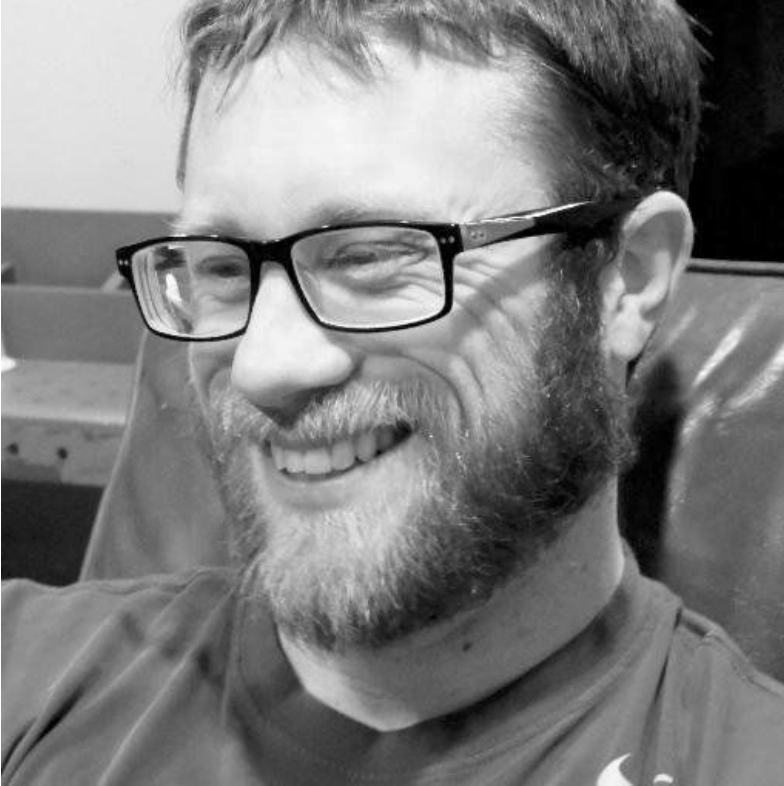
Jon Huffman-Eddy grew up in the foothills of the Sierra Nevada Mountains, the only child of a railroad worker and a jack-of-all-trades mystic. He is a graduate of UC Santa Cruz and currently resides in Los Angeles, where he writes stories in his free time and dreams of living life without a car. “Fixed Odds in Tinseltown” is his second publication.