Image
image of pencils

On Clarity and the Role of Editors

By Kat Yuen - September 4, 2021

“Are you saying what you want to say? … Are you saying it as clearly and consistently as possible?” —Alan D. Williams, listing an editor’s two core questions for authors

“Don’t pass judgment on a manuscript as it is, but as it can be made to be.” —M. Lincoln Schuster, giving advice to nascent editors

As staff on Spectrum, ours is a position which demands judicious reading, and a stringent eye. How each staff member makes their decisions differs, but in my time, I find myself returning to the issue of clarity, and the collective role of editors.

Near-all of us on the staff are students of writing, habituated in the practices of creative writing workshops; we spend the academic quarters giving developmental critiques and detailed revision notes to our peerage. We thrive seeing one another reach their goals, and celebrate each others’ growth over time. Far from the publishing-setting, forefront in our dialogues is Williams’ ideal of the editor-as-advocate, Schuster’s ideal of the editor-as-nurturer. To slide into the mind-space of reading-for-publishing, thus, is a rough shift.

Oh, if I could cash out every time we’ve wished we might offer developmental editing, to cradle submissions through revision and polish! Perhaps then it could be affordable, the time could be made, for such to be possible. Alas, it is not.

Despite the unyielding ways in which rejections are often doled out, often it is not without at least one of our staff members still in love with the work. Certainly, I could not list on both hands all the poems and prose-works I have loved, seen passed (to little grudge, now—I’ve come to recognize that the font of good submissions is unceasing; always will there be new pieces to love, and often those are the better). But always returning’s the rub: we cannot accept submissions with bruises, even if we love its potential, and often even those without flaws must be set aside for lack of page space. In asking about clarity, my line is more accurately a chasm: pieces which do not cross on first pass, fall.

My rubric of clarity is not for lack of time to puzzle over submissions’ depths, or a lack of will to do so. I acknowledge, even, the purposes of un-clarity, of obfuscation (and as a writer often play in that space myself). As a staff reader, however, I must embody both the audience and the editor: the eyes which will be consuming our journal, in addition to the hands curating it.

As a layperson, will I bother reading prose that does not grab me by the nape? Will I return to a poem if its title does not become the anchor for an image? Perhaps these seem aside, but assuredly both emotional affect and vivacity anchor themselves to clarity. If I cannot pick up a character’s development or the significance of their experiences, how will I be swept up in their apotheosis? How will a metaphor stain the page if I cannot make out its contours, its purposes?

In our hearts, I assure you, we hold writers’ passions and moments of brilliance. But, against our inner Schusters, we cannot read for aspirations, for kernels. As often as I wish I might adopt and help see a piece to its polished form, as often I only fall in love with a piece on a tertiary read, and must ask myself: is this amount of interpretive work worth it? Would someone perusing our pages be so compelled?

If not, then: will this piece be enjoyed?

As editors, we thrive on helping authors shape their works, and will often go to great lengths to advocate for the creations we love. Both Williams and Schuster, alongside their advice above, detail this advocacy, particularly within the publishing house. However, the act of editing is not just for the writer’s benefit—through submission selection we are also representing readers, editing for the benefit of curating something worth readers’ time and money.

This is not to say that we care about “upmarket” fiction, or a “formula”—after all, none of us are getting paid; the actual finances are irrelevant. Rather, my point is more spiritual, in a sense: as an editor, my judgement is a sanction; publication is a promise. By vetting for clarity, I hope to instill a bottom line: you will feel touched by this piece; in it you will find understanding.

Read moreOn Clarity and the Role of Editors

Image
waves

Introducing Spectrum Summer Edition

By Kat Yuen - August 10, 2021

Dear all undergraduate writers and artists at UCSB,

For the first time, Spectrum is publishing an edition composed solely of work by UCSB’s students, and as such, I heartily invite you to send us your creations between now and August 20, 2021 to be considered for Spectrum’s Summer Edition! We will review your work and send out decisions at the end of the month, with publication planned for mid-September, 2021.

And, we do mean that we want you! No matter your major, no matter if you’ve won awards or never shared your words, we want to read (or see) your work! Submit us your best work, but don’t shy away even if you don’t think that your work is “the best.”

For this fresh and new summer edition, we’re also welcoming a wider variety of submissions: as always, send us your poetry, fiction, non-fiction, and visual art, but also send us your scripts, your hybrid work, your multimedia, your comics, your dance, anything—if think we might like it, send it! We want to capture the full spectrum of creative expression, and will review everything you submit, so long as it meets our basic guidelines.

Don’t feel restricted by format, either—though Spectrum is traditionally a printed journal, this summer edition will instead be published online, on this very website, so we welcome works which might not conform to the page, or be static, at all. If still in doubt, feel free to email us!

Learn more and submit here

Then, after you’ve submitted that, make sure to spread the word! Send our submission form to all of your UCSB friends, for us—we can only reach so far, but with your help, we hope to find and reach all of UCSB who has to offer, to reach a full spectrum of us.

— Kat Yuen, Editor-in-Chief
 

Read moreIntroducing Spectrum Summer Edition

Image
image of a typewriter

Observations From a Spectrum Reader: Advice for Short Fiction Writers Looking to Submit

By Solomon Rios - July 31, 2021

Spectrum Reader Solomon Rios gives his advice for fiction writers submitting to Spectrum.

To writers looking to produce and submit short fiction to Spectrum or other literary journals, the best advice I can give is this: write about something you love, and love the way you write about it. Pride and care always project through the page to readers on the other side, closing that daunting distance. Of the fiction we read as editors for last year’s issue we kept those that clearly shone with care put into them. If you have the option when writing for contests or for literary journals, I highly recommend exploring topics that are personal and exciting to you — the less heard of, often the better. All this is not to say you need to try harder to tell an editor how much you care or write something highly experimental — in fact, the opposite is true. Showing, not telling, is key to any good story. Writing about something that interests you as opposed to something you think will interest others is a way to ensure that new ideas and concepts emerge, and literary journals are usually looking for novel expressions.

In terms of mechanics and content, I cannot stress enough the importance of remembering the “short” in short fiction. Some stories need to be fifteen pages long, and that’s perfectly alright (I am someone who has a hard time writing under that), so rest assured that if your narrative truly calls for that kind of length, readers will have no issue with it. That said, if I have learned anything as an editor and writer, it is that all stories can be simmered down given enough time and work, and as a result become more effective. During the editing process, we saw a great deal of short fiction that had amazing ideas, interesting segments, or compelling narrative styles, but did not justify their length. Unfortunately, based on the amount of submissions we receive versus how many we can actually publish, we cannot engage with you as the author directly to do developmental editing. This is why rewrites are usually—no, always—essential. Start by seeking out words or scenes in your piece with redundancies and eliminate as many as you can. From there, look at structure, pacing, and character arcs and cut out any passages or pages where neither story, world, nor characters are being actively developed. Perhaps the best way to think about your job as a short fiction author is being in the role of a tour guide: your job is to keep your tour group on track, all together, with confusion down to a minimum and engagement with the tour and the major stops at a maximum. Another analogy useful in untraining the constant, goal-oriented voice that yells at you to reach a high word count is to look at short fiction as a ‘lowest points to win’ game, like golf or darts. You will start the editing process with pages of words, and line by line you will train your eraser (or your backspace button) to hit bullseye after bullseye until you have run out of energy and time. Just start by getting into the practice of hitting the board, cutting your drafts down a little, and work from there. I guess what I'm trying to say is that you as a short fiction writer need to be a dart-throwing, captivating tour guide steering a disparate audience through something they will not soon forget. It will take a lot of practice, but the rewards will read for themselves.

It is always worth your time to understand where and what you are submitting, once it is ready. Spectrum, for instance, is a journal that prizes individuality and insight as well as compassion, respect, inclusivity, and honesty. There is no right way to create compelling short fiction, but the reality is that if you plan to submit short fiction you should do your research as to where it might best find a home. Spectrum is edited primarily by undergraduate Writing & Literature (and adjacent humanities) majors largely at UC Santa Barbara’s College of Creative Studies, and you can bet that no matter the prompt or year you submit, your work will be read by a dedicated group of students interested in powerful prose that speaks to the heart and comes from a wide range of places. Beyond that we scour for invention, creation, and depiction of something that feels earned and deeply contemplated. Our journal is not a place to be afraid to think outside your box, especially in the realm of short fiction where anything is possible, from whole universes to the tiniest of moments. If there is a wrong way to go about submitting to this journal, other than hate speech, tiredly played out tropes, or lazy composition, it's probably just forgetting to take your name off the piece. Otherwise, I (and I think most of my peers would agree) implore you to be in love with (cognizance of the word count notwithstanding) whatever idea you desire to write about. No idea is too mundane or too grand, yet format and thought are everything in short fiction. Hit us with some bullseyes on the personal tour of your imagination, for, as in both darts and the tourism industry, it is always important to do your homework on who you are engaging with.

As a final note, I believe the greatest help to your creative process is to read as much short fiction as you can, even across genres not your own. Whether in high school, college, or another point in life, find published and unpublished authors and read their work. Give them feedback, or take notes, as analyzing stories outside your own head is better than any feedback you can be given. It makes you think like both writer and editor. Though it seems counterintuitive, I guarantee it will develop and develop and enrich your writer’s voice. To use the wildly overplayed analogy, if writing is an exercise, then reading is the accompanying diet. There, now that we are three analogies deep, it’s probably time to wrap this up before it gets out of hand. Bottom line: read things you enjoy, that excite and inspire you. If it is true that you are what you eat, then read all the writing you can, I guarantee it will give you more perspective into what editors are looking for in a great short story than anything I have said here.

Remember, in the end, if you are just submitting to a literary journal then you are doing the work. Keep at it, keep reading, editing, writing, and stray not into discouragement! Go into the process with an open mind and take praise and criticism seriously. Never lose the love.


Read moreObservations From a Spectrum Reader: Advice for Short Fiction Writers Looking to Submit

Image
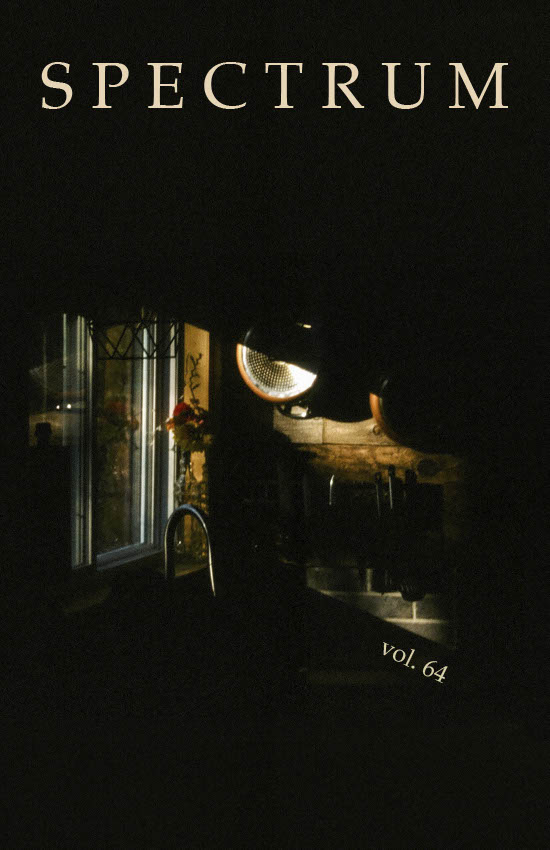
Spectrum Vol 64 cover

Volume 65 Call for Submissions

By Kat Yuen - July 1, 2021

Our new Editor-in-Chief, Kat Yuen, invites you to submit your art, fiction, nonfiction, and poetry for consideration for Spectrum Volume 65, which will be published in Spring 2022. Our reading period opens on July 1 and closes on December 31, and we will respond to all submissions by March 2022 (we apologize for the wait). To find our full submission guidelines and to send us your work, visit our Submit page.

Hello to all artists and writers:

It’s July again, and as parts of the world search for normality, we invite you to submit your weird to be considered for the 65th volume of Spectrum.

In my past two years as a reader for Spectrum, every submission I’ve loved has found its central kernel, its premise, and followed that seed to its creative and funky end. At their best, the pieces we publish are bizarre, read thrice-over, and stubborn, using their craft to unearth, to confess, and to make anew.

Around us, the world has seeking the new as well. The status quo of the pre-pandemic has not just been disrupted, but irrevocably changed: despite promises of a “return to normal,” many of us wonder if “normal” is truly possible — or even desired. That’s why this upcoming year, we want to read about Transformation.

Whether about an individual or a world, toward growth or decay, in the past or future, we want to see how changes unfold for you. Submit to us your odes to movement, your best works about actualization and realization. Paint for us transformations as small as a person’s expression or as grand as the rise of mountain ranges. Show us the changes you want to see or have seen, and what it means to leave a past state or self behind.

Above all, submit to us your best pieces, and the ones you don’t expect to be accepted. Help us continue to publish a wide spectrum of the new.

— Kat Yuen, Volume 65 Editor-in-Chief


(he/him & she/her)

Read moreVolume 65 Call for Submissions

Image
Computer

Second Impressions

By Vy Duong - June 30, 2021

Spectrum reader Vy Duong writes about her journey to become a creative writer and join Spectrum.

In truth, I’ve wanted to be part of ​Spectrum​ since even before I came to UC Santa Barbara. I remember when I was first accepted — for communication in the College of Letters & Sciences, the biggest of UCSB’s three colleges—I scoured Google for any possibility of taking creative writing courses in college. “​ucsb writing” ​lead me to “​ucsb writing program” ​which lead me to the homepage of the Writing Program which lead me to the Professional Writing Minor before I circled back to two search results down, landing on the Writing & Literature page of the College of Creative Studies (CCS) website and then eventually, ​Spectrum.

At the time, I didn’t even know what a literary magazine was. I came from a Bay Area high school considered to be a UC feeder, where the most interest and money was dedicated to developing our STEM programs, pumping out a mass of computer science majors, med school dreamers and engineer hopefuls. After struggling in calculus, sleeping through chemistry, and loathing my AP English teachers, I figured I’d pursue something in social sciences, something that could translate into business or marketing.

Creative writing was never really on my academic agenda. Sure, I wanted to be a writer when I was in fifth grade, but I had also wanted to be a fashion designer, a lawyer, a spy. Being an immigrant kid, I weigh all my life choices by cost and profit. How do I make an empty glass full? Still, I was excited at the prospect of being able to take a few classes here and there on a hobby I thought I was somewhat decent at. I looked up “​what is a literary magazine​” and was impressed by the answer Google gave me. Then I read through Spectrum’s course description and was delighted to find that I didn’t have to be a CCS student to take it. ​Okay,​ I thought, ​I’ll ask to join Spectrum eventually.

Fast forward almost two years and an ongoing pandemic later, life comes full circle. Every week, I log onto a Zoom meeting and am greeted by familiar faces. For a few hours, we go through our decisions on submissions, discuss what we liked, what we didn’t like, and crack the more-than-occasional jokes in the chat box. Sometimes, the Zoom fatigue lingers, but most of the time, this is one of my favorite courses.

At the beginning of this quarter, I was worried about how unqualified I am to be in this course. Like — who let ​me​ be the judge of what’s good writing? Fiction and nonfiction, maybe I could appraise, but poetry? The only thing I remember about poems is iambic pentameter.

Yet over the course of the past ten weeks, I’ve come to appreciate ​not knowing​ in order to learn something new. The beauty of being in a community of writers and readers like Spectrum (and the CCS Writing & Literature Program at large) is that you are always at risk of learning from someone who knows more than you. I can’t count on one hand the amount of times I have walked into a class meeting with a preconceived notion of a piece only to come away with a completely new perspective.

Being a part of Spectrum has reinforced a lesson I’ve been internalizing for the past two years: to be open to the unexpected. I’d never planned on majoring in Writing & Literature, but the one thing that the pandemic gave me was time to think. Suddenly stripped of my friends and the campus environment that had kept me going, I realized that I wasn’t enjoying my major in a way that made it worthwhile. So I thought about what I had really wanted to do since I was accepted into UCSB—creative writing. I applied to CCS for Writing & Literature at the end of my freshman year and am now two quarters deep into the program. Frankly, I am kind of loving it.

There is that saying I always get wrong. Is it that art imitates life or life imitates art? If the bleak world we’re currently living in has taught me anything, it is that plans can fall apart, diverge, merge into something entirely new. The best I can do is trust my instincts and give every thought a second glance.

Read moreSecond Impressions

Image
Phone Screen

Phoebe Pineda: Publishing in the Age of Instant Gratification: A Wattpad Case Study

By Phoebe Pineda - June 22, 2021

Spectrum reader Phoebe Pineda examines the effects of the site Wattpad on contemporary publishing.

Perhaps the most relevant innovation of the digital age to aspiring writers is the rise of online writing platforms. The most famous of these, Wattpad, claims ninety million users, and in the decade-plus since its December 2006 launch, it has spawned two feature-length film franchise adaptations (After and The Kissing Booth). Sites like Wattpad have made publishing more accessible than ever, with a new generation of emerging writers (myself and my peers included) coming of age in these online arenas.

Working on Spectrum while having an ongoing conversation about Wattpad with a high school friend who was discovering and experiencing the site for the first time gave me new insight into two very different sides of the publishing industry. On the one hand, you have Spectrum, a long-running literary magazine produced on an undergraduate campus in the same building (or, this year, the same hypothetical corner of cyberspace) where most of our staffers spend hours plugging away at their own creative projects. As such, they are acquainting themselves with the traditional publishing process from both sides of the editor’s desk. On the other hand, there’s Wattpad, which cuts out the middleman altogether, allowing writers full control over when and what they publish, regardless of whether it’s been edited or looked over by another person.

The appeal of Wattpad is simple: in an industry that can prove not only intimidating but inaccessible to beginning writers, online writing platforms provide an alternative—condensing a normally lengthy and extensive process involving numerous working parts into a few clicks and a pretty interface. Rather than spend months on end querying literary agents or dealing with a slew of rejections from publishers, writers can bring their work directly to the reader, hot off the press. Like all forms of social media, the site thrives off instant gratification, and the dopamine rush that a vote or comment notification can bring is no different than getting likes on an Instagram post—amplifying the sense of validation and accomplishment that comes from having written and published a story. For young or inexperienced writers, it’s a great way to build confidence and community, enabling them to meet readers and fellow writers and get their stories out there without the added pressure of having to impress overworked editors at publishing houses.

Missing from the typical Wattpad user’s experience, however, is an in-depth understanding of the revision process and the art of giving (and receiving) constructive criticism. The workshop is one of the most important tools in a writer’s arsenal, but it’s understandable why online writers may find it daunting: where Wattpad comment sections are generally places for readers to revel in their enjoyment of a story, peer feedback in a structured workshop can be much more nerve-wracking, evoking anxiety in even the most experienced of writers. In workshops, the reader’s job is not to enjoy but to improve, to identify a piece’s weaknesses and help the writer find ways to strengthen it—a task that is often more difficult than it sounds and generally occurs at multiple stages and levels of the story’s development.

Peer-editing on Wattpad is a strange process, owing partially to the fact that authors tend to revise drafts that have already been published and read and partially to the collective inexperience of its users. Wattpad users will often either solicit or offer “reviews” of works published on the site covering everything from developmental issues with plot and character to correcting typos, pointing out awkward syntax, or even improving cover aesthetics. This informal, scattershot editorial process, in order for the feedback to be effective, relies on both writer and reader knowing how the critiquing process works and what to look for. On a site whose user base skews young, with no official standardization or guidelines for peer-editing, it is likely that the majority of potential reviewers are unfamiliar with the revision process and how to maximize its value.

Alarming, too, is the Wattpad user base’s preoccupation with numbers. While observing a conversation between members of the community, I was struck by how much of the discussion was devoted to statistics—from reads and comments to daily word counts and even typing speeds (which in my perfectionist experience have no bearing on word count output, let alone quality of work). These conversations are understandable, albeit a bit neurotic: without the backing of a publisher, the online writer is left to market their work themselves, which entails knowing which genres attract more readers, as well as how author’s notes and other forms of fourth-wall breaking can drum up traffic by encouraging more comments. Wattpad prides itself on taking a data-based approach to publishing, relying on “audience insight,” i.e. popularity and engagement, to determine who is worthy of making it to print. This means writers fixate on gaming the algorithm, obsessing over how to attract readers and get their story noticed in a sea of millions.

Wattpad’s data-driven culture permeates every aspect of the site, but perhaps most unfortunate are its effects on the site’s already-suboptimal editorial process. Peer reviews become enmeshed in a system geared toward reaching the widest possible audience, muddling the original purpose—helping writers strengthen their stories—by conflating marketability with quality of work. Reviewers dedicate as much feedback to the publicity aspects of a story—title, cover, and blurb—as they do to the story itself. Writers begin to view their works not as stories, but products to be sold.

I came to college, and eventually to Spectrum, as an online writer. I’d always shied away from learning about the world of mainstream publishing because the thought of rejection terrified me, and in my little corner of the Internet, that rejection didn’t exist—if you liked your work enough to publish it, there was no one to stop you. Gaining firsthand knowledge of how that process works from the inside (in my case, through reading for Spectrum) makes it feel a lot more approachable, and it allows you to empathize with potential readers of your own piece: you learn that rejection is not always a bad thing, and that it’s worth trying and failing and trying again, just to get a foot in the door. That said, while it’s good to get your words out there, you want to make sure whoever’s considering your piece is reading the best possible version of it—your piece should be as polished and revised as you can get it. In the slush pile, there are no covers, no blurbs, no stats or analytics or comments from enthused readers. At Spectrum, we judge our submissions solely on the merit of their content—on whether the author can not only hook us into their world, but convince us to stay.

Spectrum, unlike Wattpad, has a modest readership. It is a hidden gem within a hidden gem, tucked away among the many treasures UC Santa Barbara has to offer. The publication process, while relatively short, still comprises multiple stages of screening, discussions, spirited disagreements, and mind-changing before the table of contents can be finalized and the magazine itself put to print. Our writers this year have been asked to exercise even more patience than usual as we navigate the pitfalls of publishing during a pandemic. I doubt any of these writers expect to become an overnight sensation, and it is likely they will never meet many of their readers. Yet in this age of instant gratification, self-marketing, and algorithmic anxiety, we don’t need our submissions to grab millions of people. All we ask of our writers is that they tell a good story.

*This post was written with assistance and insight from Ryan Talvola. Thanks, Ryan!

Read morePhoebe Pineda: Publishing in the Age of Instant Gratification: A Wattpad Case Study

Image
Paige Headshot

In Conversation with Paige Dixon, Spectrum’s Editor-in-Chief

By Luc Le - June 3, 2021

Spectrum reader Luc Le interviews our editor-in-chief, Paige Dixon.

Now in its 64th year, Spectrum Literary Journal has seen more than its fair share of talented writers, poets, readers, and, of course, editors-in-chief. This year, Spectrum is led by Paige Dixon, a sophomore writing & literature major at UC Santa Barbara’s College of Creative Studies (CCS). I caught up with Paige over Zoom to talk about her plans for the UC system’s longest continuously published literary magazine, and the unique challenges of organizing Spectrum during the pandemic.
This interview has been edited for clarity.

Why did you first get involved with Spectrum?

I was involved in a literary magazine at my high school, and the backstory there is that my high school has very little involvement with creative writing. The school runs from seventh grade to twelfth grade, so I was there for six years, and, in all that time, I had about two creative writing assignments. So what we wanted to do with our literary magazine was provide a platform for creative writers to share their work because we knew that a lot of people were writing, but independently and separately from each other. So we wanted to make this platform to share our creative work and, you know, kind of create a creative community within the school, and it worked out really well, and I enjoyed doing it a lot. So when I came to UCSB and I found out that there was a literary magazine here, I wanted to get involved. Spectrum’s at a much greater scale than my high school one was, and so there's a lot of work to be done for every issue, and I just wanted to help out.

What made you want to become editor-in-chief?

Well, I really enjoyed working on Spectrum my first year—I definitely got a greater appreciation for why literary magazines exist and just what they can do. I think I just enjoyed working on it so much that I wanted to engage with it even more. I actually applied to be managing editor, but then they asked, well, would you be willing to also apply for editor-in-chief? And I said yes, because I had a bunch of ideas I wanted to try out, and they were kind enough to give me the platform to do so. I really wanted to get people more engaged with—to get people more aware of Spectrum [around campus]. Having come from the [College] of Letters & Sciences, I know just how invisible Spectrum could be, and coming from my high school where our literary magazine was so prevalent in the creative community, I was wondering, where is this magazine? Why don't we see it on campus more? And so I wanted to get people more engaged.

What are your typical responsibilities as editor?

There's basically three periods of [the] editorial process. There's [the period] from opening to closing of the submissions, and I just sort of keep an eye on that, making sure things are working out well. And then after the submissions close, we immediately start to process those, get them ready for the readers to evaluate. I love spreadsheets—they’ve been helping me keep track of everything and to assign pieces to the readers, making sure we cover enough in each session to get finished in a timely manner. [The] next [period] is managing the submissions as they go through the editorial process: everyone's going to read some pieces, give feedback on them—we're going to have three rounds of editorial reading. And then we also work on a bunch of things behind the scenes, like with our website and social media.

The big one for me is the budget. We get a yearly amount of funding from CCS, and then
we also have a few other things that we can apply for to supplement that funding, like grants.
Next quarter, when we have expenses, I'll be working with Marianne [Morris], our [financial] coordinator, to get those expenses paid. We’ll design the magazine together, but then I'll be in charge of getting that design printed. The situation has looked really different from how it has in the past, because of COVID, but I've been able to sort of follow in my predecessor's footsteps and just adapt to what we need to our situation. I have to give huge thanks to the editorial team—Hayley Tice and Chloe Schicker, and also Dr. Rebbecca Brown, who’s our faculty supervisor—it really was a collaborative effort to conduct the whole operation over the last few months.

How has organizing the magazine in a pandemic been different from in prior years?

The biggest hurdle that COVID has given us has been mailing copies of the magazine to people who have bought them because we can't do that at all right now. We don't have access to the physical magazines and we also don't have access to the mailers [because campus is closed]. So we can't take orders right now, which caused us a little bit of trouble at the beginning of summer when we had to shut that down. And I anticipate we're not going to be able to mail out until probably next school year, maybe late summer this year. So all those orders that we have for the magazine can't be fulfilled for a while. It's kind of a bummer, but we've had to put orders on hold so that we can prevent any more issues from arising.

Tell me a little about the theme of this year’s issue, “perseverance.” Why was it chosen? How has it shaped this year’s edition?

Last year was actually our first year with a theme, and it was “truth.” And that theme made an amazing issue, but it also made a very heavy issue, as you can probably imagine. And so there actually came a point last year where we were considering, you know, how difficult that issue would be to publish in a world that's just starting to struggle with COVID at an extreme scale. And so we were a little—not concerned, but just aware of how much more emotional labor that issue might provide. But there were important topics that the theme covered, and it wasn't all doom and gloom—there was some beautiful work in there. So this year, when I was thinking of the theme for our issue, I wanted to do something that represented the best part of people during COVID—you know, the strength that is getting us through this. And strength isn't consistent. I think in reality, everyone has their good days and their bad days. I wanted to do something that encapsulated all of that—the overall journey. And this can be applied to many things, not just COVID, because life is still continuing during this pandemic. So I chose perseverance because I thought that that word would bring to mind that core “I will not give in” mentality—no matter what the inspiration behind it was, whether it was strength, or spite, or love, or desperation. And so that was basically the general thought behind it.

What’s the best part about working for Spectrum?

I have to say that this year, I was aware that it might be a struggle to get our student
readers to engage with the journal just because everything was online. And so one thing that's been great this year is that everyone has been really engaged with the pieces and the works, and I think we've had some great discussions. We have a wonderful team because people are so willing to collaborate and willing to discuss, not argue. That was one of the best parts—just being able to explore these pieces together. I always love to hear when someone else interprets something just completely differently than I did—I just think it's fascinating. I think everyone pitched in way more than they were required to, so I just was delighted. And then also just personally, I’ve always loved reading the submissions, seeing the wide range of them and finding some works that you just fall in love with. That's the best part of any literary magazine.

Read moreIn Conversation with Paige Dixon, Spectrum’s Editor-in-Chief

Image
Soft Targets Cover

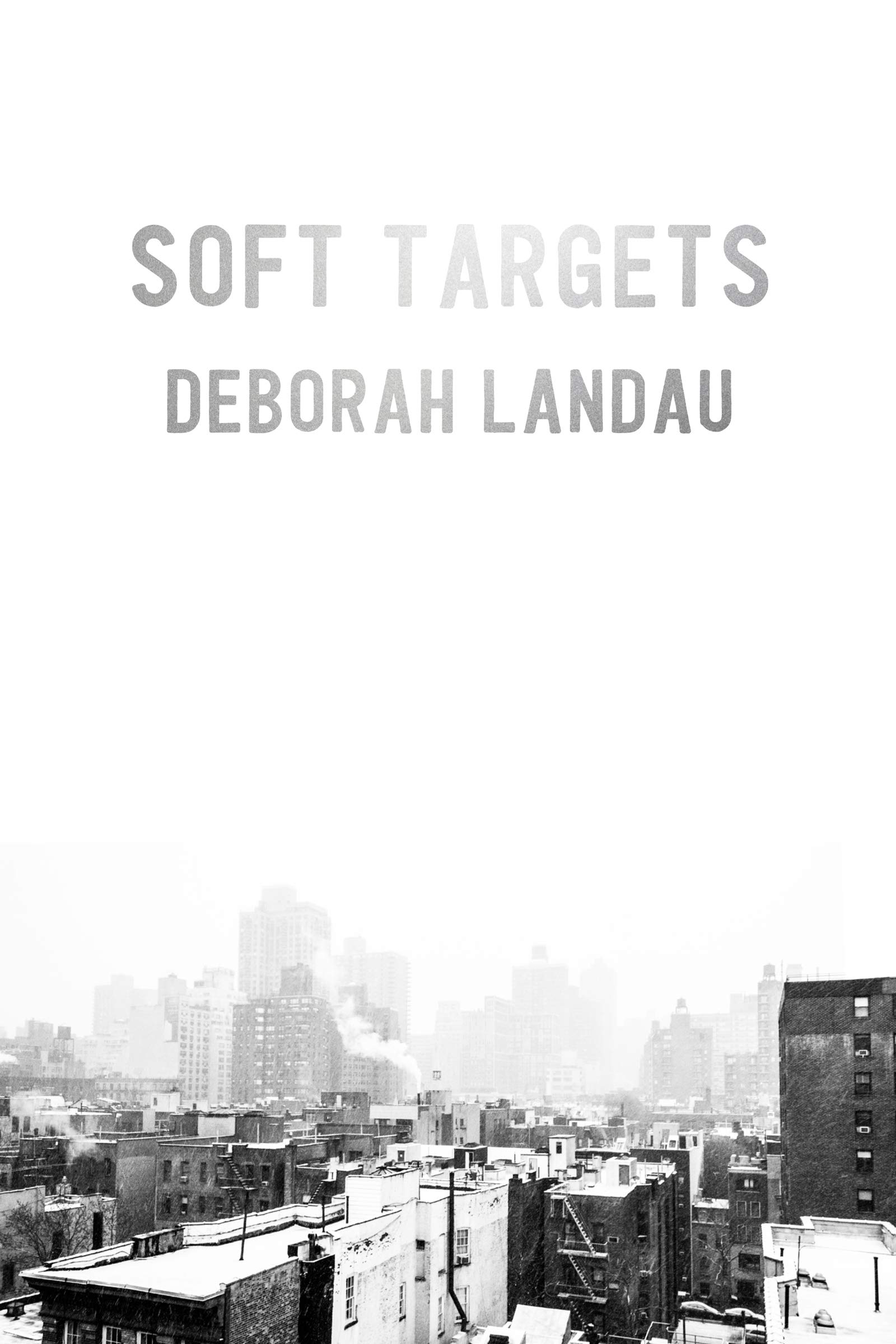
On Soft Targets by Deborah Landau

By Amelia Rodriguez - June 1, 2021

Poet and Spectrum reader Amelia Rodriguez reviews Deborah Landau’s 2019 poetry collection, Soft Targets.

In her poem “America wants it soft,” Deborah Landau borrows language from a fact sheet on how to survive a nuclear blast. “do not look at the flash / take shelter lie flat and cover your head,” the poem warns. “do not call the school / do not pick up your children … radiation cannot be seen, smelled.” And then a moment like something out of a nursery rhyme: “get clean soon and gently wipe your ears.

    This talent for finding tenderness in what’s horrifying reverberates throughout Soft Targets (2019, Copper Canyon Press), Landau’s fourth collection of poetry. The titular targets are, of course, bodies, moving restlessly across the collection’s eight poems, through time and space—Parisian  streets, Nazi Germany, a mammography waiting room filled with potted plants. Often choppy and full of associative riffing, the poems are tied together by sound as well as theme. Landau lets her statements stretch out, hurtle forward, before slamming to full stops. The six long poems that form the bulk of the book leap between couplets, tercets, single line stanzas. There’s a restlessness, too, to the way Landau catalogues the wounds of our contemporary world, juxtaposes them with palliative tastes of beauty and joy. 

The book’s attention to hope works precisely because it sometimes edges toward despair. “The good news is we have each other,” Landau writes in “there were real officers in the streets (Paris).” “The bad news is Kalashnikov assault rifles, / submachine guns, pistols, ammunition, / four boxes packed with thousands of small steel balls.” Landau often pours forth lists like this. Some are harrowing, others heavenly, so the poems move in flashes—snapshots or gunshots.

Landau scatters floral imagery across the pages of Soft Targets, its meaning shifting as the poems progress, become more personal. In “there were real officers,” she distills: “Much trouble at hand, yet the lilies still.” Later, “into the sheets we slipped, a crisis,” offers orchids. The poem’s speaker spots them at a mammogram appointment, wonders if they’ve been placed in the waiting room “For hope maybe, for promise of bloom.” Orchids’ history as funeral flowers goes unspoken, but it haunts the following page as the speaker’s mother dies from cancer. Attempts to save her involve “chemicals daisied in”—so the flowers become, all at once, pain and healer, symbol of hope and of failure. 

This is a collection interested, ultimately, in simultaneity. Landau often places predicates before subjects—“the musk scent and filthy pile we’ll be,” “Weak and disordered become the government”—so wills lose their futurity. The musk scent, the disorder and weakness are with us here, now, in the poem. 

Her work is marked by seamless tonal slippages, the breezy colloquial voice of “Such a reckless act, to pop out a baby” giving way to the more brutal “with the jaws of the world set to kill.” There’s room for humor, too, amid everything. Landau’s dry wit shines in her rumination on bad leaders in “America wants it soft.” “how is it we pushed the handle down and they popped out? // Toasted!” she quips. The wit turns rapier, holding us accountable: “And now they sit at the head of our table, // can we be excused?”

Unflinching and unsentimental, Soft Targets doesn’t claim that love can save us. But it begs us to take notice of the goodness, too, that comes with being soft. It’s a take on perseverance that resonates in our often hopeless-feeling moment—the reminder that our bodies can be more than a burden to bear. As Landau plainly puts it, “Slaughter happened around the planet; / we stayed in the thicket whipping up love.”

Read moreOn Soft Targets by Deborah Landau

Image
shipwreck

Contributor Interview: Lee Huttner

By Belle Machado - May 31, 2021

Belle Machado, Spectrum managing editor, interviews Lee Huttner, writer of the essay "The Wrecking Ground," published on our blog.

1. What inspired you to create this piece?

“The Wrecking Ground” was inspired by Henry Thoreau’s 1850 journey to Fire Island, at the bequest of Ralph Waldo Emerson, in an attempt to recover the body of Margaret Fuller, who died in a shipwreck off the island’s shore. It’s an event not many people know about, and such a serendipitous triangulation of well-known American writers—Emerson sending Thoreau down to find Fuller—one of those truly “stranger than fiction” moments in history. The image of Thoreau standing at the shore, looking out onto the Atlantic, waiting for a body to wash up, stuck in my mind since I first learned about the event years ago. Digging deeper into it all, I found myself increasingly fascinated by this side of Thoreau we’re rarely exposed to—the private journals, letters, rarely read essays. He’s such an American literary giant that we don’t give him enough credit for being truly weird. I was deeply moved by this more vulnerable, trembling, sometimes hallucinatory writing, and wanted to explore all of these overlapping and intersecting streams of story.

2. Why did you choose to name the piece The Wrecking Ground?

The phrase comes from Emerson’s letter to Horace Greeley, transcribed in the essay. But it’s also symbolic, this liminal littoral space onto which the wreckage of the world is cast up by the waves. It’s troubling that Emerson wants Thoreau to recover “fragments of manuscript or other property”—he doesn’t make mention of Fuller’s body, but rather the book manuscript he knew she was carrying (and which has never been recovered). What did Waldo value more, Margaret’s body or her book? So there’s another layer to the title, the wrecking ground of the page, words as flotsam and jetsam, Prospero’s drowned book. And the beam of light that sweeps round and round, leading ostensibly to safe harbor, but in the case of the Elizabeth, causing the wreck itself, just as the wreckers who originally inhabited the island did.

3. If you had the chance to go back and do something different with this piece, would you? And if so, what would you do?

I wouldn’t do anything differently, but if I could expand it—and I do see this work stretching out—I’d want to bring more of Fuller in, and explore that problem I mentioned in my response to the previous question. She was a spectacular human being (I highly recommend Megan Marshall’s outstanding biography), a deeply engaging writer, and a fierce advocate for women’s rights. I want to dive into that dynamic between physical body and body of work—who gets to write and who gets written about—the agency of a woman writer and the ways in which women’s bodies are written upon or transcribed.

4. This piece is Creative Nonfiction, and this can be seen with the inclusion of some real, very well-known writers in the piece. How did you mesh the facts of their lives, however, with the fiction and vivid scenes of your piece?

I have a very loose definition of what creative nonfiction is as a genre, and a very fluid definition of “genre” itself. This piece stays true to historical fact, but the work of characterization is entirely my own. I as a presence, if not a character, am in there as well. And there are instances of pure fantasy and fabrication in the essay. I don’t know what Thoreau actually saw, felt, thought. I view this essay as speculative nonfiction. There are many echoes in the essay of some very specific journal entries and other writings—in many ways, I tried to write those journal entries he never wrote about his trip to Fire Island. So I don’t distinguish much between “fact” and “fiction,” and work to hybridize and render these concepts as unstable in my writing as they are in life.

5. In your piece The Wrecking Ground water acts as an alluring entity that captures, takes, and doesn’t give back. What inspired you to portray water in such a way?

I have long been fascinated with the relationship between humans and water, and the ways that this relationship is both erotic and deadly. There is a long literary tradition of water being an element of intimacy—especially queer intimacy—as well as mortality. It’s also a space of transformation and metamorphosis. Look at Classical myth: Narcissus turning into a flower, Hermaphroditus becoming androgyne, Icarus, Hylas—all of these deaths and transformations occurring in or beside water. Marlowe’s sixteenth-century retelling of the Hero and Leander story has Neptune sexually assaulting Leander in the Hellespont before he drowns. Ariel’s “Full fathom five” song in The Tempestis a song of unbecoming and rebecoming on the seabed. Death in Venice. At Swim, Two Boys. The list goes on. Water begs to be interrogated as a space where boundaries (corporeal, libidinal, affectual) are effaced.

6. Why did you decide to place each journal entry or quote on an entirely separate page?

Each of the sections in this essay are on separate pages. Again, this goes back to the idea of wreckage, the wrecking ground—fragments washing up, journal pages, letters, lost manuscripts shuffled and deposited by the waves. In both form and content, this is an essay that accretes rather than progresses. The history on which it is based is very much a narrative that has to be reconstructed, it’s not just there for the taking. The white space reminds us of that, the lacunae in the archives.

7. Throughout your piece, you include small inserts of dialogue between Echo and Narcissus to illustrate that gradual pull towards the water and the destruction of the allured individual that follows. Why did you keep the scenes between Echo and Narcissus as small snippets of dialogue scattered among the rest of the narrative?

“Reflection” and “echo” are deeply related ideas, and that’s why Echo and Narcissus are part of the same myth. It’s a myth of unrequited love—Narcissus for his reflection and Echo for Narcissus—and interminable waiting. It’s also a myth of silence and frustration. Narcissus cannot speak without his reflection effectively interrupting him, and Echo is only able to repeat Narcissus’s words. I don’t think I can answer why these scenes appear as they do in the essay. Much of my writing operates by intuition. But I do think the Echo and Narcissus story is a primal myth, about gender, desire, and self-destruction, and in many ways it underscores this whole essay, like a faint pulse. Thoreau’s waiting, watching. The silence of the sea.

8. Part of what is so intriguing about your piece is the seeming unrelated stories that are all tied together by the mysterious and dangerous entity that is a body of water. What made you decide to include each of the separate narratives that you did, and which narrative was the hardest to get onto paper?

Funnily enough, the sections that stick more closely to the “facts” were the most difficult parts to write. So writing about the Elizabeth, Captain Bangs, Fire Island, Fuller in Italy were tough because the language is deliberately more straightforward. I wanted to present the information clearly but also make it engaging. It’s so much easier, I think, to imagine history than it is to write it. Especially for a piece like this, it’s crucial that the writer establish trust with the reader. You have to let them know that there’s truth here, there’s facts, so that they can follow along with the more fantastical elements. I know that, as a reader, I am always taking a leap of faith into a text. Some readers are more comfortable with that leap, some are more skeptical, careful. Show them that the water’s warm first. Then you can raise a hurricane.

Read moreContributor Interview: Lee Huttner

Image
Spectrum logo

Winter Quarter Update

By Paige Dixon - May 12, 2021

Hello all,

As our student staff wraps up their winter quarter, so too have we wrapped up decisions on the pieces that will be published in this year’s Spectrum, volume 64. I would like to thank everyone who submitted their works of prose, poetry, and art to us this year, and doubly so for sticking with us as we moved from Submittable to our Google Drive-based submission system. Also, thank you for your patience as we read through each submission. Spectrum has a rather long reading period, but you have made it through, and if you have not seen an email update yet from us on your submission, please expect to see that sometime soon. To all whose pieces have been accepted, congratulations! We look forward to working with you for this issue.


Next up, our staff is off to a well-deserved spring break, after which we shall move into the editorial process. Contributors, please expect to see a few emails from us over the next few months. During this time, we will also be posting to our blog with posts written by our staff, including another update on production near publication in late May or early June, a few web-published submissions, and information about this year’s launch party.


With all my best,

Paige Dixon

Editor-in-Chief

Read moreWinter Quarter Update