Image
Vol 69 Submissions

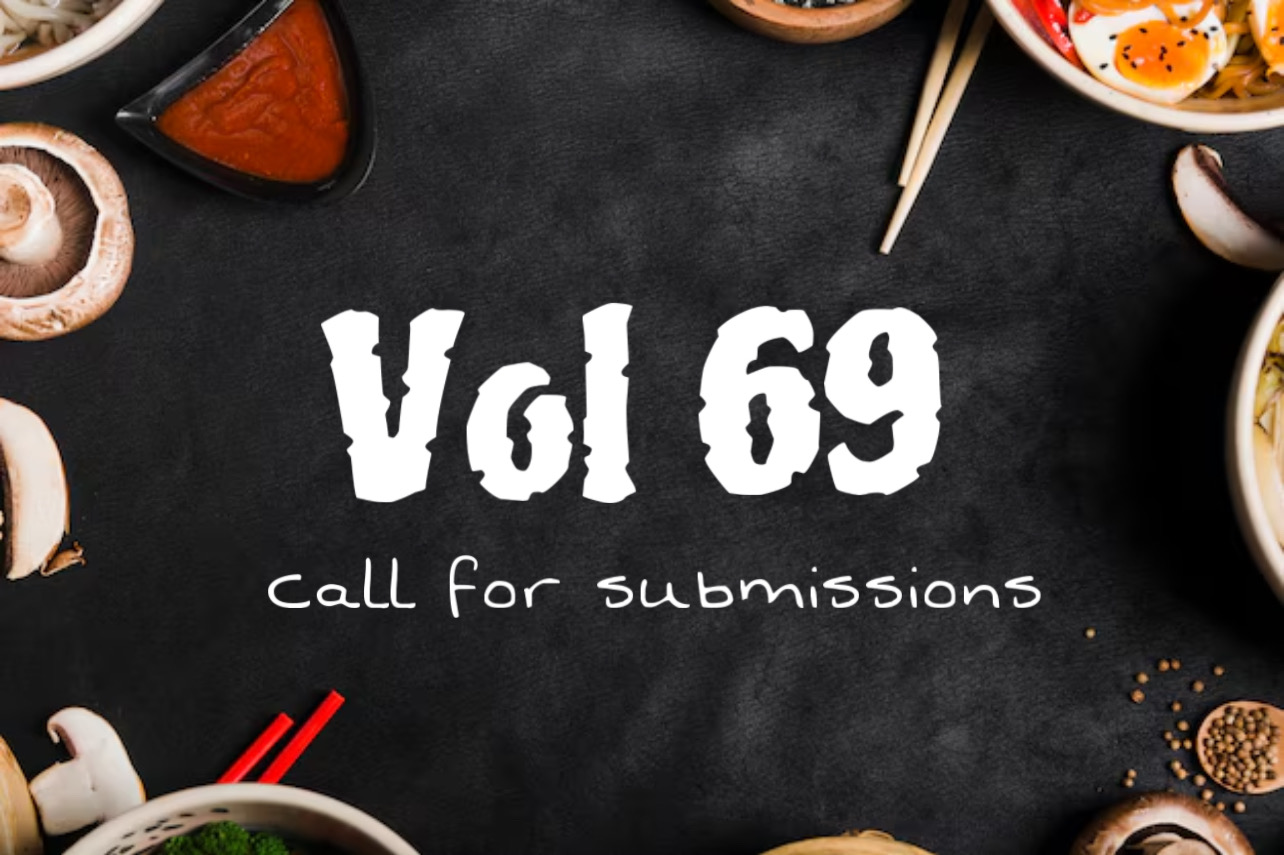
Vol. 69 | Call For Submissions

By Caitlyn Lee - July 1, 2025

Spectrum Literary Journal is currently open for submissions. For volume 69, we will be navigating the artistry in consumption. 


Spectrum is an international journal of art and literature that is annually published by UCSB’s College of Creative Studies. The publication was founded in 1957, marking it as one of the oldest literary journals in the UC system. Through a broad range of genres and subject-matters, Spectrum aims to showcase both the scope and depth of human experience.


The theme of volume 69 is consumption. We encourage you to consider how artists can make meaningful engagements with the internal worlds we embody and the external worlds that surround us. In medicine, we associate the word “consumption” with illness and decay. Alternatively, what we consciously refrain from consuming in material goods can be taken as an act of protest. Through gastronomical rhetoric, consumption has the capacity to capture the nuances of cultural heritage and gender. Take, for example, the following excerpt from Kim Thuy’s novel, Man, translated by Sheila Fischerman:
“Five hours’ baking at a low temperature forced the bread to play a protective role for the fruit as the bananas slowly delivered up the sugar in their flesh. Anyone lucky enough to taste that cake freshly baked could see, when cutting it, the crimson of the bananas embarrassed at being caught in the act.”


We are curious about how your personal engagement with consumption extends beyond simple transactions. While consumption can signify decomposition, further inspection allows us to understand that the word is also constructed from the Latin roots for “altogether” and “to take up.” With this in mind, the editors of volume 69 encourage you to reconstruct and complicate what it means to consume or be consumed. We invite you to partake and share your poetry, prose, and artwork that is in conversation with the theme of consumption for vol. 69. 


***


Please click here to familiarize yourself with our submission guidelines and to submit your work. We look forward to hearing from you. 


Caitlyn Lee, Editor-in-Chief
Vol. 69

Read moreVol. 69 | Call For Submissions

Image
Ultraviolet Banner

Spectrum Ultraviolet | Call For Submissions

By Macoy Greco - July 1, 2025

Exclusively open to UCSB undergraduates, Ultraviolet aims to amplify student voices and showcase the spectrum of human experience through a broad range of genres and subject-matters. We make the invisible visible. 

Spectrum Ultraviolet is a digital magazine of art and literature published by UCSB’s College of Creative Studies under the larger umbrella of Spectrum Literary Journal, the oldest literary magazine in the UC System. Spectrum Ultraviolet is currently open for submissions to all UCSB students through October 26th, 2025.

Meet the Mag!

If Spectrum Ultraviolet has a theme, it’s our lack of one. The cacophony that follows opening submissions to an entire student body and saying “hit me, baby.” But, we must confess, we still believe it’ll all come together. Sort of like those hodge-podge playlists of all your (right-now) favorite songs, that definitely shouldn’t work, but somehow do. Flashy, youthful nearly to the point of parody, and marking our ancient and analogue journal’s big foray into the digital world, Ultraviolet’s visual style can best be described as, like, Y2K+? While we kinda know what we’re about, Ultraviolet is your lightshow too, and wherever you go, we’ll try and keep up.

We know, anything and everything is a bit of a flashbang prompt. In these next two weeks, feel free to completely indulge yourself, totally wig yourself out, or shine anywhere on the spectrum between. Whether you’re submitting fiction, nonfiction, poetry, art, or whatever else you feel like, just trust in your voice, and it’ll be our readers feeling that polychromatic party-light blindness—you know, in the good way! And, if you’re still hard-up for a model, look at Spectrum’s forthcoming digital excerpts from Vol. 68. We promise you’ll find your light, even if you can’t quite see it yet. 

That said, “making the invisible visible” is difficult without some transparency: pieces selected for Spectrum Ultraviolet will be debuted throughout the year on Spectrum’s website, and will, toward the end of Spring quarter, be collected in a magazine-style PDF. Potentially, the digital release could be supplemented by a small print run of floppies—all depending on our budget, we are a student-run literary magazine, after all. But, before we can address hurt for money, we’ve gotta address our hurt for material. So genuinely, seriously, please submit to us. And let me just say, as Ultraviolet’s self-appointed Queen of the ‘Zine, the worst thing you can do is not have fun with it!

Macoy Greco, Editor-in-Chief, 

Spectrum Ultraviolet 

***
Please click here to familiarize yourself with our submission guidelines and to submit your work. TTYL!

Read moreSpectrum Ultraviolet | Call For Submissions

Image
"Perhaps that is the purpose of editors and publishers: to connect writers & readers across borders of time and space."

Spectrum Across Time: A Young Writer’s Encounter With a Decades-Long Legacy

By Yoyo Na Huang - February 3, 2025

As a student, and as a young writer, I am often battling time. I transferred to the College of Creative Studies’ Writing and Literature major in the spring of my freshman year and instantly felt that there was much catching up I needed to do. So when the opportunity to join Spectrum presented itself, I was sure to seize it. 

Literary publishing is an industry I had adversely neglected up until joining CCS, despite long having dreams of becoming an author. It had never quite occurred to me that between writer and reader there was an entire business of people who sought for, selected, edited and eventually published writing for the world to see. 
Upon joining Spectrum, I was tossed into the behind-the-scenes of the literary world that I long to become a part of. Backstage from the excitement and anxiety of wishful writers, I was met with a task that has transformed my perception of the life of the literary creative. 

Over the past few months, Spectrum’s editors and fresh recruits have been conducting an equity and thematic audit of its published authors, beginning from 1957, when it was first established. Through the audit, I have come face-to-face with the lives of people I only learned of through their writing. 

On a fateful day, I came across the name Hugh Ranson in the 1990 edition of Spectrum. I typed the name into the search engine and, like with all my searches, hoped to find a source that could tell me a bit more about this writer. To my surprise—and great delight—I found that he was about to give a presentation at the Santa Barbara Public Library the very next day. In a bout of excitement, I arranged my schedule to accommodate this timely discovery. 

A recently retired school teacher, Hugh Ranson has been a birder since the age of 12 and is currently a bird columnist for the Santa Barbara Independent. He moved to Santa Barbara from the United Kingdom in his youth and has stayed ever since. Santa Barbara is the perfect destination for birders to observe and capture varying bird species in the wild. On the chilly evening of November 21st, he shared his birding experiences with an audience at the Faulkner Gallery. 

With no knowledge of birding and a fear of birds, I quietly sat in the back of the gallery room, awaiting a chance to speak with the presenter. After the presentation was over, I approached Hugh and introduced myself. 

When I told him that I was a student in CCS, he eagerly shared that he, too, once studied in the very building I frequent on a weekly basis. He was surprised that I had found him through Spectrum and was joyed to hear that our dear literary journal had survived the test of time. Our brief meeting filled me with a euphoric sensation as I felt the wheels of time turning to allow for such a fortuitous encounter. 

A few days after, I sat down with Hugh on the small patio of a coffee shop in Isla Vista. We talked about the Spectrum that was familiar to us both, of CCS, and of all the people who were inadvertently tied to our conversation. 

I learned that Hugh had left home in search of adventure when he arrived in Santa Barbara. As a birder, the magnetic pull of the city’s flourishing natural environment had compelled him to stay. An opportunity to take a class with Max Schott, then instructor in CCS’s Literature program, prompted Hugh to apply to and eventually complete the program. During his time in CCS, he was active as a Co-Editor-in-Chief of one volume of Spectrum, and spoke fondly of his experience working alongside his peers to put together the journal. When he was not editor, he submitted the writing he did in class to Spectrum, many of which appear in the 32nd volume of Spectrum. Two such pieces of writing, “Samson Shorn” and “Taking on The World,” Hugh shared, were inspired by his personal experiences. 

Hearing of its continuing legacy, Hugh was eager to submit to Spectrum again. Though he admitted that the new form of online submission troubled him a bit, his passion for writing remained undimmed. He spoke of a story he had written during his time at CCS that he would like to submit and I encouraged him to share some of the photos he had taken on birding expeditions as well. We ended our conversation on a confident note that we shall meet again, perhaps behind the scenes of Spectrum. 

Getting to know Hugh Ranson led me to think about how physical documentations of literature can dissolve the restraint of time to connect people. Perhaps that is the purpose of editors and publishers: to connect writers and readers across borders of time and space. Hugh’s long standing love for writing and birding also inspire me to make the most of my time in CCS doing what I enjoy without being rushed by anxiety, for what I truly love to do should accompany me far after my school days. 

* After this conversation, Hugh Ranson was able to fact-check the content of this article. 


Read moreSpectrum Across Time: A Young Writer’s Encounter With a Decades-Long Legacy

Image
“...how do I humble myself cosmically, and please, god, how do I still find time to write?” - Makenna Arase

Writing in the Time Of—Oh, There Is No Time

By Makenna Arase - January 22, 2025

In the Winter Quarter of 2024, I became proficient at two things: breaking fevers in one day, and making things much, much harder than they had to be.

Winter in Santa Barbara has always been more concept than anything else. If it is ever a concrete thing, it’s wet. And winter quarter of 2024 was exceptionally, almost incredulously, wet. Tree branches flung themselves across the walkways between my dorm and dining hall. Classes were canceled due to flood warnings. Parents called about possible evacuations.

There is a specific, defiant attitude UCSB students hold against winter here. After being caught in an IV coffee shop with no umbrella, I dredged home with a friend in the torrential downpour in nothing but a scarf and trenchcoat. Later, on the way to our friend’s party, we joked about recreating it in the coming thunderstorm but “better dressed” this time (in swimsuits). When classes were canceled and parents called, my hallmates huddled in the lounge and laughed about their concern. Most of us are from the SF Bay Area, where winter has sharper teeth and layers serve a realistic purpose. I imagine we saw the thunderstorms and just thought of spring in Berkeley.

There is also, unfortunately, a specific, defiant attitude UCSB students hold against being sick. No matter how responsible you are in the beginning, how much you isolate, or how many shots of Dayquil you down to feel better, the ratio of late assignments to days spent resting becomes too alarming, and you get sloppy. You start to bargain with yourself that I’ll rest over the weekend and After this assignment, I’ll lay back down. You don’t, of course. There’s always another one, and fever reducers are pretty cheap, anyway. What I’m trying to say is that in the pit of winter quarter, we were all wet, we were all sick, and despite the sniffling, frayed pride, we were all miserable.

I’ve always had the habit of developing stress fevers, nursing them over the course of a week, breaking them on the weekend, and entering the next week with another growing behind my temple. I’ve developed a system for these things; the exact dosage of drugs and liters of water I need to drink tally in my head like a balance sheet. I feel like golden age sci-fi. When Fiona Apple wrote “Extraordinary Machine” she was talking about me, actually. Sometimes I feel like the only way I can achieve the efficiency I crave is to quantify it clinically; the state of my body hardly matters as long as it’s moving forward. I’m sick, but look how fast I can make myself better. Pull out the stopwatch. Lap.

I’m five classes deep into a schedule I promised would be better than last quarter’s (it’s not), outlining a fiction piece that was supposed to be a maximum of ten pages (again, no), and trying to find time to both keep up lying to myself and genuinely get things done. I have a habit of forgoing anything I may enjoy if I don’t believe I have enough time to accommodate, which really means I never do anything fun. I’m incredibly predictable, in either a study spot or my dorm, working, or trying very, very hard to do anything I could reasonably call “work.” At the end of the day, the hours are gone and I still have to write.

What’s circling the drain at the bottom of all this—the wet winter, the collective misery, the fevers, the endless, endless writing—is: I need to get outta here! I need to leave my shoebox dorm room that I’ve been pacing for three days because I’m sick again, but it might be infectious this time; I need to actually, seriously touch grass; I need to see the sun and be reminded of the small animal that I am. A pathetic ant crawling from a hole, humbled cosmically.

So that becomes the question I ask myself: how do I humble myself cosmically, and please, god, how do I still find time to write?

There are twelve coffee shops in or around UCSB. By the time this excursion of mine is over, I’ll have visited eight. One of the professors within W&L posits the virtues of what she calls “F*ck Off Fridays,” which are exactly how they sound. I decide to adopt the habit, try it out like a new coat for a while, and see if it fits right. I start leaving campus at seven in the morning, two in the afternoon, or whenever I can get around class. Fridays are the days I don’t have any classes, so I truly feel I embody this faith I’ve taken up; I’m a real disciple by week two. I take the free bus line and think of home; I see hummingbirds and bougainvillea outside the windows as we take an hour to get halfway to downtown. The rain dotting the windows trickles iridescent and harmless. It’s a grueling pace that should set my productivity anxiety on fire, but I love it. I love my bus travelers. I love the cappuccinos I always order and the bagels from Java Station I get on the side. I love getting lost and always being directed by someone’s kindness. I feel human again, a little bit. I’m a bug with warm feelings on the inside.

But I’m still not writing. Or rather, I don’t write like I want. I find it doesn’t matter whether I sit in the library or a cafe for eight hours a day staring at a document; my workflow remains essentially the same. I often feel that this myth of “the perfect writing system” consistently pokes around writing spaces. The writing community of YouTube blooms with “I Tried ____’s Writing System for 30 Days” videos. Aesthetic slides of “How to Write More” Instagram posts and Tumblr writing tip masterlists pop up like weeds. We all want that perfect spigot of productivity. We all walk around reassuring each other that it doesn’t exist, that it’s just discipline, but there are degrees to discipline, aren’t there? There’s doing the work, and then there’s work that’s produced. It’s one thing to get up at nine to sit in a cafe to write, but it’s another to actually have a complete document by the time you leave. You may even go in with the realistic expectation that doing this won’t solve all your problems but at least make them more pliable. In some ways, it feels worse when they aren’t, like they’ve suddenly changed the answer to a riddle they promised was simple. You turned on the promised spigot and nothing came. There comes an urge to turn eight hours into twelve, to crunch the balls of your feet into the earth and run laps and laps, to turn the work into penance instead. To make yourself sick.

Throughout all the coffee shops, I tried very hard not to make myself sick. This is a conscious act most people find trivial, but writers can be so dramatic sometimes that I think the urge to suffer for our art comes with our desire to create it. The answer, if there is one, to “How do I write when there’s no time and I need to get out of here?” is really just: Get out of there. “There” could be physical (your university, your keyhole-sized dorm room), or it could be sticky the way most subconscious things are. Your old routine. Your friends. Your perception of what you’re creating. Seriously, your perception of what you’re creating.

Not every assignment is going to be your magnum opus. Likely, nothing you create in college will be your magnum opus. Much of it will be good, but not a lot will be great, and that’s okay. Go into writing believing your magnum opus is ten years on the horizon and still a speck in your eyelash. Unfortunately, the answer to “How do I write when I have no time?” is you must make time. Carve it out with a knife or your fingernails if you have to. Go to eight different coffee shops. But take transit twenty minutes slower than the most efficient route. Carving time to work also necessitates carving time to enjoy some of that time, as well. This is the part that hurts, but you have to do it. Remember, cosmically humbled!

My writing is still largely unfinished; only Act 1 of 3 is completed, and sometimes carving out time feels like shaving the thinnest sliver of skin from a fruit. But I claw it out with my fingernails and make time to pick blackberries around my house, too. The rain comes and I take the time to cover myself with a coat. I’m an ant that can only crawl so fast, after all.

Read moreWriting in the Time Of—Oh, There Is No Time

Image
Vol. 68 Call For Submissions

Vol. 68 | Call For Submissions

By Amitha Bhat - July 12, 2024

Spectrum Literary Journal is currently open for submissions. For volume 68, we will be navigating the artistry in embracing failure. 

Spectrum is a national journal of art and literature that is annually published by UCSB’s College of Creative studies. The publication was founded in 1957, marking it as one of the oldest literary journals in the UC system. Through a broad range of genres and subject-matters, Spectrum aims to showcase both the scope and depth of human experience.

As writers, we are not only acclimated with the art of failure, but we might also consider it to be an integral part of our creative process. Parsing through internal blockages, receiving criticism, crafting revisions, liberally wielding the delete button, and starting over. Because we know what it means to fail, we are able to reconstruct our words in order to convey meaningful sentiments and narratives. There is immense beauty in welcoming the state of being wrong — and learning from it. Consider the following excerpt from Robert Hass’ poem, “Faint Music”:

“I had the idea that the world’s so full of pain

it must sometimes make a kind of singing.

And that the sequence helps, as much as order helps—

First an ego, and then pain, and then the singing.”

We implore you to draw from this excerpt and ask yourself what value failure holds for you. Place yourself inside the kaleidoscope of failure, close your eyes, and allow yourself to listen to the “kind of singing” Hass describes. What do you hear? How can you fail “in every new and beautiful light,” as Paisley Rekdal suggests in her poem “Strawberry”? We are curious to read about the intricacies of such an experience. 

***

Please click here to familiarize yourself with our submission guidelines and to submit your work. We look forward to hearing from you. 

Amitha Bhat, Editor-in-Chief

Vol. 68 


Read moreVol. 68 | Call For Submissions

Image
"Spectrum is an incredibly unique learning experience and being Managing Editor comes with a stack of responsibilities that are equal parts challenging and rewarding." - Mikayla Buhbe

Letter to Future Managing Editor

By Mikayla Buhbe - May 14, 2024

Dear Future Managing Editor, 

First off, I hope your day is going well! My name is Mikayla Buhbe (she/her) and I was the Spectrum Managing Editor for the 2022-2023 school year. Spectrum is an incredibly unique learning experience and being Managing Editor comes with a stack of responsibilities that are equal parts challenging and rewarding. Below, you’ll find a few practical notes, general suggestions, and overall ideas for how I might’ve done my job a little bit differently. 

Before I begin, I want to note that this particular year’s volume of Spectrum went through some unexpected and unusual challenges on our Editorial Board. Some of my suggestions and notes may pertain to details that aren’t as relevant to how Spectrum traditionally runs, but I feel that it’s important to keep a historic record in case a similar situation arises or future ed boards face similar circumstances. 

1. Start early and start with a clear understanding of each person’s role - Spectrum has a ton of moving parts and every member of the ed board is responsible for handling a different aspect of them. Managing Editor is predominantly in charge of staying on top of the email, organizing submissions, coordinating with readers and contributors, and generally filling in any gaps that the Editor in Chief needs help with. In Fall quarter, that means you’ll be organizing the submissions folders and responding to any email concerns you receive from authors. In Winter quarter, you’ll mostly be acting as a reader and helping to coordinate the AWP trip, should you choose to attend. At the end of Winter, you’ll be sending out the accept/reject decisions. In Spring, your workload will pick up quite a bit, as you’ll be corresponding with authors about contracts, queries, and making a ton of copies as each work moves from folder to folder. Your Editor in Chief will help you out with some of these tasks, but it’s chiefly important that you’re on top of your organization and email correspondence. Emails can build up like crazy, so do your best to answer them as promptly as possible. A lot of folks are used to delayed or nonexistent responses from literary magazines, so responding quickly will also get you some of the sweetest responses :)

 2. Plan ahead as much as you are able to - One of the biggest challenges our team faced was not anticipating how many little details would crop up throughout each quarter. During the summer, I’m going to be trying to work on a Spectrum handbook that will hopefully walk the team through some general processes (organizing submissions, email templates, launch party details, etc.) to make this easier, but if you see something starting to become a problem, try to voice it as soon as possible. It can be easy to let Spectrum slip down your priority list, but managing some of the smaller issues will save you time in the grand scheme of things!

3. Consistent Communication - I know this is a struggle to coordinate with so many busy schedules, but if possible, I would highly recommend finding a way to meet regularly with your ed board, even for just 30 minutes each week. Clarifying each person’s role, navigating any adjustments or challenges, and looking toward the next step as a team will help all of y’all be more successful and cohesive as a group. 

4. Be clear with your advisors when you need help - Asking for help can be challenging, but do your best to ask for help when you need it from your professors and advisors! You are not alone in this process and sometimes, Spectrum can build up, especially towards the back half of Spring quarter. If you need support, ask! Advisors are there to help :) 

I hope this year’s Spectrum goes well and I know y’all can do it! Be sure to keep track of your own needs and priorities throughout this process, and seriously, be sure to get enough sleep and food! Find the little moments of appreciation - in the pieces you read, the classmates you bond with, and the silly contributors you get to interact with. Best of luck and if you need any help, reach out to me!

Sincerely, 
Mikayla Buhbe 
she/her/hers

Read moreLetter to Future Managing Editor

Image
Good writing, meaningful writing, to me, is sincere. - Jasmine Liang

Reflections on an Increasingly A.I.-Reliant World

By Jasmine Liang - April 22, 2024

No matter what online platform I turn to for mindless entertainment, I can’t escape the persistent fear-mongering concerning A.I.'s effect on job security. If you have a job, chances are there is an article claiming that A.I. will replace you. These fears aren’t totally unfounded; they’re leftover from the industrial and computer revolutions which left high unemployment and low wages in the wake of their unruly transitions of labor. Following the displacement of artisanal jobs in the 18th century, Luddite riots popped up over Britain, where people destroyed the factory robots that had taken their jobs. Even though the rise of factory robots leads to “creative destruction,” a term coined by economist Joseph Schumter, which refers to the shift that creates new jobs for a different worker than the one displaced, a sudden shift in labor leads to riots, an unstable economy, and political unrest. The latter manifested in Donald Trump’s election, where voters, especially young men, feared losing their jobs and believed Trump was the “candidate for change” because of various vague campaign promises.

Thus, with ChatGPT’s popularity and the subsequent rise of other generative writing A.I., the Writers Guild of America (WGA) strikes to prevent writers’ jobs from ever being at risk of A.I. displacement. But how realistic are these concerns? 

Anticlimactically, it might be too early to tell. A.I. is, of course, predicted to affect different careers compared to industrial robots since it’s able to take on flexible tasks compared to robots’ repetitive, physical movements. Since A.I. is able to mimic the elusive “soft skills” that employers are always looking for, it’s also predicted to more heavily impact women compared to men, who have previously been the main victims of displacement. However, during the rise of industrial robots, we hypothesized that bank tellers employment would tank, yet somehow their population grew much larger than before.

Call me an idealist, but I don’t believe writers can be easily replaced (and I’m prepared to fight for that truth). A.I. generation at this stage is a neatly wrapped package of repurposed words and ideas. A.I.-generated stories are dull at best; I write more interesting grocery lists and Google Calendar invites. Good writing, meaningful writing, to me, is sincere. Emotions are reframed and condensed into language by someone with intimate experience. The same logic applies to why writing from an outside perspective may be difficult or fall flat without considerable research; it’s easier to write what we know. There’s a candidness to laying yourself bare and vulnerable to an audience that an A.I. can’t recreate. My definition of good writing has always inherently drawn a boundary between A.I. and human writing, and I think most people agree. I recently watched a TikTok by Jack Martin that joked about the WGA strike, making fun of the idea that an A.I. can create a script anywhere as well-written as a human could. 

When I’ve experimented with ChatGPT in the past, succumbing to curiosity like everyone else, it’s automatic form of storytelling (when asked simple questions like “write me a story about ____”) defaults to childish tales with obvious lessons. More advanced software designed to write produces a wider range of tones and genres, but still requires human intervention in terms
of prompting, editing, and refinement. At best, A.I. might become a tool to supplement tedious writing tasks. Applications like Grammarly have already become quite popular amongst students, but I, and many of my peers, still haven’t been tempted by its convenience. And nowadays, Grammar-checkers are built into word processors, but they haven’t taken over the job of the copyeditor. The human touch is, shockingly, still relevant. If you’re a writer, try not to add A.I. supplementation on your list of worries. We have bigger concerns, like getting past the first page of the novel that’s been sitting in Google Docs for five months. 

While I support A.I.’s potential to take over dangerous or unfulfilling jobs (with a proper transition of labor), there will never be a shortage of aspiring writers. Creative writing will always entice; people will always write. A.I. might present another competitor amidst a low opportunity career, but the careful touch and originality that humans present will win over audiences. Writers may hold the stereotype of constantly grappling with imposter syndrome, but we should give ourselves the credit of being able to write better than an algorithm. We are the ones who fuel the algorithms in the first place.

Read moreReflections on an Increasingly A.I.-Reliant World

Image
"After all, the worst thing that could happen is rejection."

Submission Burnout: Taking the 100 Submissions Challenge

By Sophie Najm - March 27, 2024

Freshman year I heard one of my writing professors talk about taking on the “100 Submissions Challenge,” a year-long promise to submit to 100 literary magazines for publication. Only recently had I learned about literary magazines from a stray submission call email for ZAUM Magazine. After grilling one of my upperclassmen about how to format a cover letter, I was lucky enough to be accepted for publication. It was my first validating experience as a writer — telling me I could exist in a professional sphere and that I wasn’t as far behind my peers as I’d thought. So when I heard of the 100 Submissions Challenge, I decided to take it on myself. After all, the worst thing that could happen is rejection.

I was lucky to have a submission buddy for this challenge: my best friend (and now roommate) Jasmine Liang. We shared the resume-related need to be published, but also the personal desire for writing incentives. Pursuing this goal meant we would be forced to write more often and hopefully curb burnout. We started with some UC Santa Barbara (UCSB) publications, including Spectrum. I remember submitting a hybrid piece about social masking (which upon re-read was not great by any standard) without reading any of Spectrum’s previous issues. My method for submitting was to see if it was a themed call, and if not, just submit whatever I had. 

When the first 10-15 rejections rolled in, I knew something needed to be adjusted. The first thing I changed was actually reading the past issues of the magazine, noting its vibe, difficulty, and what kind of language they preferred. Very quickly was I able to notice a pattern within magazines: this one liked snapshot pieces, this liked distant narrators, this one liked extended metaphors. Soon my second acceptance rolled in alongside my third and fourth. By about 30 submissions into the challenge, I had been accepted into five magazines—mostly university publications—including Laurel Moon, The Catalyst, The Ekphrastic Review, Sad Goose Cooperative and Outrageous Fortune Magazine

By this point Jasmine and I considered ourselves to be submission connoisseurs, fluent in the lexicon of literary magazines. After reading my peers’ pieces, I would send them submission links to literary magazines I thought would fit their work. I know you wrote that one beach vampire story, here’s a lit mag that does dark horror! or This lit mag would love your poem about breast reduction surgery! Many of the students in our major, Writing & Literature at UCSB’s College of Creative Studies, feared the submission process or thought it out of reach despite their amazing writing. We saw a gap that needed to be filled.

In October of 2022, Jasmine and I started Publishing Press, a student organization made to provide guidance and incentives for UCSB students to publish their visual and written work. We bullied our peers to join our Discord server where we regularly posted submission calls alongside some observational notes about the magazines. With the advent of Chill Subs, our job became infinitely easier, and we gained a reputation for our lit mag experience.

40 submissions into the challenge, something started to wane. Classes and professional development had a death grip on our lives. Submitting became something I just didn’t have time nor energy for, no matter how many random moments inspiration hit me. Every time I posted a submission call, I no longer thought about what I could submit, but rather it was me checking off my presidential duty of Publishing Press. I had reached submission burnout. 

50 submissions, 44 rejections, and no desire to submit anytime soon: was this all I gained from my failed 100 Submissions Challenge? 

It was around this time that I joined Spectrum as a reader. Quickly I was evaluating 5-10 pieces of writing every other night and passing judgment on them. At first my notes were neat and clear: Writing lacked clarity, theme was not explored satisfyingly, or extremely compelling prose with unique vernacular. That soon devolved into: bro what, this is wild and i’m here for it, or idk i’m lost. I was reading work ranging from first-time writers to well-written veterans; seeing the vast disparities in experience levels reignited something within me. I recognized my freshman self in those first timers, and in those veterans I saw a goal — something to reach for. 

There’s something humbling about reading spectacular writing while it’s unpublished. Suddenly the author doesn’t look like a headshot on a book sleeve. They’re like me: sat behind a desk, pecking at their keyboard, and copy-pasting the same cover letter for the millionth time. 

Today marks my 65th submission. Here’s to 35 more.

Read moreSubmission Burnout: Taking the 100 Submissions Challenge

Image
second person generally serves one of two purposes: in nonfiction, it instructs; in fiction, it immerses. - Phoebe Pineda

You and Yours: In Defense of the Second Person

By Phoebe Pineda - December 19, 2023

I recently listened to an episode of a fiction-writing podcast discussing point of view (POV) and which narrative perspective to use when writing a story.  The podcaster explains your standard first and third person in detail, explaining the benefits of each as well as the distinctions between third person omniscient and third person limited.  The more elusive second person, however, she glosses over, referring to it as a “novelty” that, while “interesting and engaging when done properly…can be jarring to the reader” due to its rarity in fiction.

Now, I consider myself something of a second person enthusiast, a connoisseur, if you will (perhaps even a “stan”).  So while I understand the podcaster’s trepidation—her goal, after all, is to advise beginning fiction writers, primarily novelists, looking to break through commercially—I’m a bit dismayed by the haste with which she dismisses second person as a viable narrative lens.  I feel compelled, therefore, to make a case for second person, a perspective I gravitate towards so strongly that I used it in two of the three prose pieces included in my senior creative capstone project.

What do you think of when you think of the second person?

Some might say “Choose Your Own Adventure” books, a childhood staple for readers of a certain generation.  The podcaster cites “short stories, instructional narratives, and how-to books” as other places where second person appears frequently.  Fanfiction enthusiasts no doubt associate second person most strongly with “Y/N” or “your name,” the reader self-insert who embarks on grand adventures with boy band members and fictional werewolves.  While each of these niches has their devoted audience, none of them connotes the smashing success an aspiring novelist might crave—hence second person being dismissed as a (ahem) novelty, a children’s gimmick that allows authors to eschew substance for convenience, exploration of character for indulgence of readerly whims.

(When even Y/N, Esther Yi’s cheekily titled send-up of K-pop fandom, is told in first person, can a beginning writer be blamed for playing it safe?)

These examples demonstrate that second person generally serves one of two purposes: in nonfiction, it instructs; in fiction, it immerses.  Both contexts typically assume the character is some version of the reader’s actual self, even if that version is a deep-sea explorer or an English detective.  Rarely is the reader asked to transform into a completely different person, and when they are asked to do so, particularly when that transformation requires them to assume responsibility for questionable decisions, they might bristle.  It’s one thing to read about someone unlikable—it’s another thing entirely to become someone unlikable, especially when you have no choice.

And yet there’s something about the second person, that in-between space it occupies, that allows for more flexibility, more honesty than might be possible in other perspectives.  Where first and third person hold the reader at a comfortable distance, the proverbial fourth-wall break of second-person POV firmly situates the reader not as observer, but participant.  In some cases, you inhabit the mind of the POV character, assuming their perceptions and worldview; in others, the POV character (a first-person narrator) addresses you, either as a reader or as an important person in their life.  The result is a strange, disquieting intimacy, one I wanted to invoke consciously in my creative capstone pieces: one is a take on Charles Yu’s “Standard Loneliness Package,” which takes place in a world where call center workers are paid to adopt clients’ physical and emotional pain; the other is a glimpse into a codependent queerplatonic relationship between two housemates.

Second-person narration allows you to be a bit more playful with your descriptions, poetic in ways that might feel forced or overbearing in first person but wouldn’t quite have the same punch in the third person.  A first-person protagonist can attempt to navigate complex relationships and emotions through conversation with an unseen second person, like Little Dog in Ocean Vuong’s On Earth We’re Briefly Gorgeous.  Or the second-person narrator can take on the voice of a taunting subconscious that slowly overwhelms, as in Leslie Pietrzyk’s “Headstrong.

Admittedly, I haven’t read a ton of novels written in second person, and I realize much of the hesitation might be concerns over the (ahem) novelty of the perspective growing tired after a few chapters.  Nonetheless, it’s possible to incorporate second person into longer works of fiction, and it can be especially effective in shorter fiction, whether speculative or more straightforward literary realism.  Here are some excellent examples of second person I’ve read:

  • Interior Chinatown by Charles Yu is not only a second-person novel, but it’s also formatted like a screenplay.  Using these unconventional elements in tandem, Yu immerses the reader in the inner monologue and psychology of his protagonist, Willis Wu, a Chinese-American actor attempting to ascend from bit parts as corpses in police procedurals into the widely idolized Kung Fu Guy.  Willis perceives the world, and himself, through the lens of his career and its relationship with his racial identity.
  • A Visit from the Goon Squad and its sequel The Candy House by Jennifer Egan are novels that read like kaleidoscopic short-story collections, with each chapter a vignette told from the perspective of a different character from Egan’s sprawling cast.  The POVs of each vignette range from third person to first person plural, with the occasional venture into second person, which Egan uses primarily for characters experiencing (conscious or unconscious) psychological dissociation.
  • Emergency Skin by N.K. Jemisin is a shining example of how second person can be wielded to great effect in sci-fi.  It’s told in the imperative, a series of commands and eerie assurances issued by a hivemind narrator (the Founders) implanted into the reader-protagonist’s brain.  The story’s tension emerges from the protagonist’s attempts to overcome his programming as he is confronted with a reality that does not align with what the Founders have led him to believe.
  • “Story of Your Life” by Ted Chiang employs a combination of first and second person, with the main character, Dr. Louise Banks, narrating to her unborn child—the “you” whose life story is being told.
  • “Esmeralda” by Mia Alvar is one of my personal favorites, a short story about 9/11 told from the perspective of a Filipino immigrant employed as a custodian in the Twin Towers.  I’ll let Alvar’s 2016 interview with the Reading Group Center speak for itself:

I wrote “Esmeralda” in the second person to invite—even force—the reader to identify with a kind of character who often becomes marginal and invisible in many people’s daily lives, and also to reflect on how difficult and awkward and imperfect it can feel to walk in someone else’s shoes.

This quote really captures the essence of second person, what makes it so effective as a storytelling tool: its confrontational nature, when handled well, can evoke a uniquely strong form of empathy.  Second-person writing grants you permission to either live someone else’s experience, or to assume a strong enough emotional bond with a first-person-POV character that they trust you with some of their darkest secrets.

So how might you go about dabbling in the second person?

You might start by writing a letter: from a mother to a child, a lover to an ex, an ornament to a Christmas tree.  Or you might comb through some of your existing stories and rewrite them in the second person, see what changes—what new insights emerge from the narration that third or first person might have obscured.

Or you might take an entirely different angle, and refer back to those more conventional uses of second person mentioned earlier: instructional narratives and how-to books.  Emulating the style of mundane documents is a common device in contemporary speculative fiction, an excellent way to ground your reader in a world that might be very different from our own.  How might one go about hatching dragon eggs or summoning an eldritch deity in a college dorm room?  Could you find ways to draw out an intriguing character from these mundane, impersonal formats?

Maybe over the course of your experiments you say, “The second person isn’t for me,” and return to the world of Is and mes and mys, hes and shes and theys.  Or maybe something clicks, and you find yourself engaging that hypothetical reader, constructing their spectral, conceptual presence into something tangible, something concrete.

Ultimately, the choice is yours.  But why not give it a chance?

Read moreYou and Yours: In Defense of the Second Person

Image
I was already immersing myself in the professional literary publishing world as a student who was still learning the ins and outs of her own writing. -Tia Trinh

Spectrum and Imposter Syndrome

By Tia Trinh - December 17, 2023

I didn’t know what a literary magazine was until after I got accepted into UC Santa Barbara (UCSB). As a Writing & Literature (W&L) major, it feels shameful to admit. To get into the program, I had to demonstrate a high level of interest and passion for the subject and yet I wasn’t even familiar with literary magazines. The extent of my publishing knowledge was limited to books and stories I could access through my high school’s The New Yorker subscription, among other well known publications. 

I came from a high school that focused on STEM programs and activities, where students were encouraged to take part in the International Baccalaureate program with the promise of immediate success. I attended classes with Speech and Debate National Champions with inflatable egos and Science Olympiad champions who asked after every test, “So what score did you get?” Being a part of a literary magazine was never part of my career plan. 

In fact, I stumbled across the W&L major by accident. While my friends expressed interest in chemical biology, engineering, and pre-medical programs, I admitted that I was looking into English and communications. In the midst of a pandemic, I felt even more lost. When choosing what to apply for at UCSB, I came across “Writing & Literature” and found myself learning about the College of Creative Studies (CCS) and the unique opportunities presented by the program and major. 

Thus began my journey as a CCS W&L student. As a wide-eyed first year, I grappled with the concept of being in college whilst navigating the requirements of my major. I couldn’t quite take upper division classes just yet, so my knowledge of the literary world was still rather surface level. My first year felt like I only scratched the surface of what it meant to be a writer. But I was content. If I couldn’t fit in with my STEM oriented peers, then surely I could find a place with other writers.

The word “imposter syndrome” was a familiar term. I had felt it before countless times, but for the first time I felt wildly anxious in an environment that I was supposed to be an expert in. I say expert in its loosest terms. Perhaps the label, “Writing & Literature Major” was getting to me. To many of my non-CCS friends, the assumption became that because I had gotten accepted into CCS, then surely I knew what I was doing because not just anyone gets into CCS.

I received praise over being a writer and old friends from home joked that I was so bold to pursue this as a major. Whenever I mention that I’m a W&L major to others, I’m hit with the classic, “Oh my god, I hate writing. I could never do that.” Sure, I say the same thing about STEM but I began to wonder if I was really cut out for the program. I couldn’t help but compare myself to others and began to doubt my own skills as a writer. I feared that the pieces I produced lacked a substantial plot or developed characters. I was afraid that my works didn’t have any themes that stood out to the reader or my message became lost under heaps of unnecessary details. By the end of my first year, I was burnt out from anxiety that I wasn’t doing enough. 

When I finally started the Spectrum series in the fall quarter of my second year, I had my first dive into literary publishing. 

But as 2023 slammed into me with each week bringing a new wave of bad news, I found myself looking forward to the Spectrum readings. The longer pieces allowed me to dive into new worlds and experiences, and I found myself becoming immersed in the process. It felt like I was being let in on a secret, having the chance to read such a wide selection of unpublished works that stirred all sorts of emotions like simple joy from nature poems or an exciting thrill from science fiction-esque short stories. 

I could discuss fiction and nonfiction pieces even if I stumbled over words and anxiously forgot what I was going to say mid-sentence. But with poetry, I felt lost. I was never very well versed in poetry, so what could I offer to the discussion table? I couldn’t help but feel that I was much less qualified than my peers, who seemingly were much more knowledgeable about literary publishing, and nearly everyone was already published already. In short, I didn’t think I was qualified to be in the room.

Being on the Spectrum team has taught me the importance of patience in the literary publishing world. Now having been an editor and a submitting writer, I have a much greater appreciation and understanding of the writing to publishing process. We receive works from writers who are just stepping into the writing world, and those that are already published and well-versed in the world of literary magazines and journals. 

Now as a second year, with a much more solid understanding of the program and my own goals as a student and writer, I have come to the realization how important it is to not think so much about how you might think you don’t belong. All of us are still learning from professors, from readings, and from each other. 

It sounds silly to see it written down, because it seems to be common sense. Still, Spectrum offered me a place that was both professional and academic. I was already immersing myself in the professional literary publishing world as a student who was still learning the ins and outs of her own writing. 

I still stress myself out on a daily basis, take on too many classes and responsibilities, then bemoan about it to my friends. But at the end of the day, I return to the old, yet charming building that is CCS and put myself back into an environment that truly makes me feel like I belong: a room with other writers.

Read moreSpectrum and Imposter Syndrome